Home Blog Page 20

Are FHA Loans Available for Mobile Homes?

FHA Loans for Mobile Homes

Most homebuyers take out a mortgage when purchasing a new home. However, buying a manufactured home often means going through different financing channels than site-built homebuyers use. 

You might have heard about FHA loans and how they help buyers afford to own their own home. If you’re considering your financing options for a manufactured home, you might be wondering: Can I get an FHA loan to buy my manufactured home? 

The good news is: Yes, FHA loans for mobile homes are available! These loans can help families afford high-quality long-term manufactured housing. Read on to learn about the basics of FHA loans for mobile homes and when it’s time to ask a mobile home financing professional about your qualifications for an FHA loan. 

What Is an FHA Loan?

An FHA loan is a mortgage loan that is backed by the U.S. Federal Housing Administration. One of the FHA’s lending partner institutions issues the mortgage, while the FHA shields the lender from risk by guaranteeing the buyer’s loan obligations. This allows the lender to offer mortgages to a wider range of buyers and provide more flexible terms.   

Defining features of FHA loans include: 

Mortgage insurance is a key component of FHA loans. The borrower pays a mortgage insurance premium to protect the lender’s financial interest in case of default. Typically, one larger mortgage insurance payment is required as part of the closing process, and the buyer also pays a monthly premium when they pay their mortgage. 

Advantages of an FHA Loan for a Mobile Home

An FHA loan is a great way for mobile home buyers to find mortgages that suit their financial needs. Here are some reasons that FHA loans are a popular way to obtain manufactured home financing:

  • FHA loans typically require a lower down payment than traditional mortgages. If a buyer’s FICO score is above 580, the buyer can provide a down payment of just 3.5 percent of the loan amount.
  • For buyers with little established credit or past credit problems, an FHA loan can be the most affordable mortgage option. 
  • FHA loans can be used to buy a manufactured home, whereas some loan products can be used only for site-built homes. 
  • The FHA offers a streamlined refinancing program that allows FHA loans to be refinanced quickly and easily for qualified borrowers. 
  • The FHA will allow closing costs to be financed.

Do You Qualify for an FHA Loan for a Mobile Home?

The requirements for FHA loan eligibility can vary, so ask a lending institution about their individual requirements. Some of the common standards for FHA loan eligibility include: 

  • You must use the home as your primary residence. 
  • The lot and lot lease agreement must meet FHA standards.
  • The manufactured home must be compliant with the federal HUD code.
  • The property must be appraised by an FHA-approved professional appraiser. 
  • The manufactured home you’re financing must be affixed to a permanent foundation and titled as real estate. 
  • You must show proof of consistent income, have at least two existing lines of credit and be within the FHA’s requirements for debt-to-income ratio. 

Note that according to the Consumer Financial Protection Bureau, FHA loans are typically best suited for borrowers with lower credit and less ability to make a down payment. Borrowers with better credit who can afford a 10 to 15 percent down payment may pay less in the long run by using conventional financing, 

Getting Started with an FHA Loan

The first step to getting an FHA loan is speaking with an FHA lender in your area and asking to get pre-approved. During this process, the lender will review your qualifications and determine how much you may be eligible to borrow. Pre-approval isn’t required, but it’s helpful. 

Next, you’ll fill out Form 1003, the Uniform Residential Loan Application, and submit it to the FHA. If the FHA approves your application, the lender will order an appraisal of the property you want to buy. If the property is compliant, the lender will begin the underwriting process. 

During underwriting, you’ll have to provide more detailed financial information to the lender’s underwriters. Once you’re approved, the closing process can begin. (Don’t forget to ask your lender if you can finance your closing costs.)

Looking for More Financing Tips?

MHVillage is a one-stop-shop for the latest information on manufactured home financing. Read our blog on how to get a loan for a mobile home to find more useful financing tips, or explore the different mobile home financing companies in the market.

Mobile Home Leveling FAQs: What Homeowners Need to Know

Buying a double wide mobile home

Even though mobile homes are generally easier to maintain compared to traditional homes, they still require regular maintenance. No one likes to do it, but the only way to have a safe home is to perform routine maintenance on a regular basis. One of the essential maintenance chores is having your mobile home leveled. Although mobile homes are leveled during installation, they need some adjustment from time to time. What’s great about mobile home leveling is that you can do most things by yourself with just a few tools.

Here are some of the most important things that every mobile home owner should know about mobile home leveling.

What is Mobile Home Leveling?

Leveling is one of the most important stages of mobile home construction. It takes place after the home has been delivered to its site and placed onto the prefabricated foundation. Mobile home leveling ensures that the home’s weight is distributed evenly and that the floors are level across the entire building.

How often should you check the level of your mobile home?

Many mobile home owners aren’t aware that they should check their home leveling regularly. According to professional installers, the first check should be performed 90 days after installation. Regular checks should take place once a year, ideally at the beginning of summer. In addition, it is important to check the level of your home after floods, earthquakes, hurricanes, windstorms, and other extreme weather conditions.

What situations cause leveling to be necessary?

As your house settles into the ground, some problems may start to occur – problems that will become much worse unless you address them on time. New homes and those that have been moved recently are the ones that need leveling the most.

There are numerous reasons why mobile homes become unlevel. For example, underground roots may cause the soil to move. Other environmental factors, such as flooding or earthquakes, can also cause trouble.

These are some of the most common signs that mobile home leveling is necessary:

  • The house looks slightly tilted when observed from the outside;
  • Doors and windows don’t fit properly or won’t stay shut;
  • Cabinet and closet doors are hard to open and close;
  • The skirting looks bent;
  • Awnings are bent or difficult to use;
  • There are cracks in the ceilings, walls or floors.

How much weight will a mobile home floor hold?

Your mobile home floor should be able to hold the weight of an average household item. In case there is water damage, however, any weight could break through the floor boards. Water damage usually occurs under doors, windows, and around bathroom fixtures. Therefore, you should carefully examine your floor boards before placing heavy furnishings on them. If there is a problem with the floor, take your furniture to a storage unit and stack your storage the right way to keep your belongings safe until the problem is fixed.

How to check the level of your mobile home

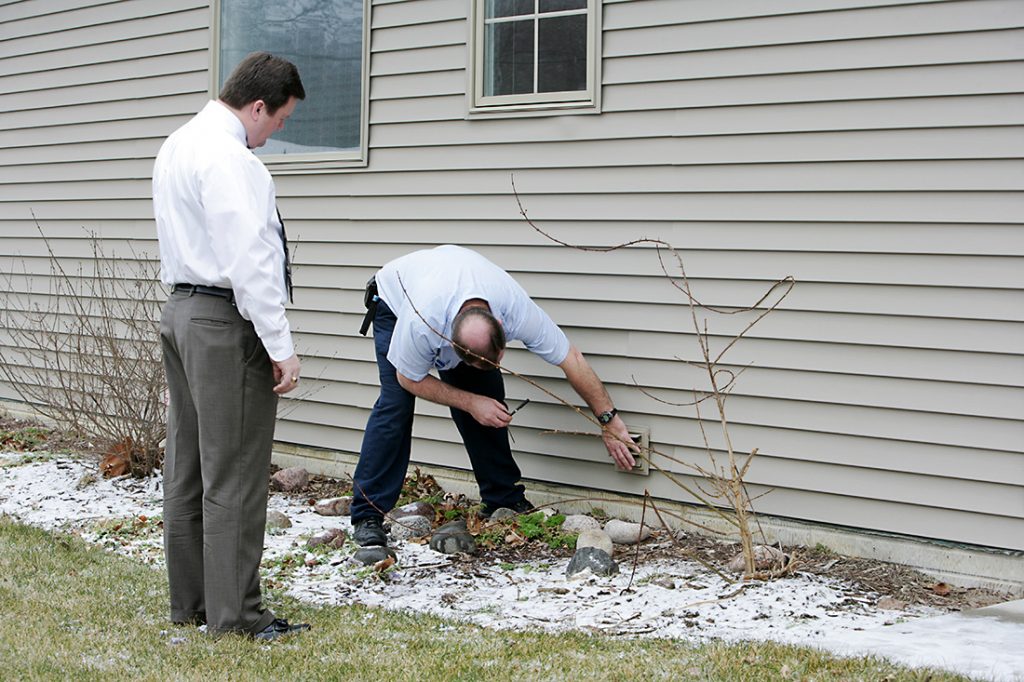
You can easily check whether your mobile home is level or not. You don’t need professionals for this task but you should not go underneath your home by yourself. In case there is an emergency, you should have someone by your side.

First, disassemble and detach the skirting, then loosen the tie-down straps. To find the current level of your mobile home, place a level in the center of the beam and watch the bubble to check how level it is. Then, check the bubble again after moving the level to the nearest support pier. Keep moving the level toward the end of the main support beam and checking the bubble. Then, take the level back to the center and check the other side of your home. Remember to wear proper work gloves and eyewear!

Affiliate Link Below – MHVillage receives a small commission from the seller for purchases made through this link.

How to level the home yourself

In case some part of your home is not even, it needs to be adjusted. Mobile home leveling is not terribly complicated, but it is very physical, as you’ll be crawling underneath the home. The most important tools to have are a water level and hydraulic bottle jacks.

  • To raise your mobile home to a level position, you will need the proper jack. Remember to place a piece of wood under the jack to make it more stable. Start jacking up the house and stop once the bubble is centered.
  • There should be some space between the lower beam and its support. That space should be filled in order for the beam to stay raised. You can use a piece of wood or a shim to support the beam. Hammer it into place, then lower the jack. When the level shows that part of the home is even, your job is done.
  • After you finish leveling your mobile home, check the whole beam once again to be sure the entire home is even.
  • Make sure no water lines were damaged or dislodged while you were leveling.
  • Finally, adjust the tie-downs to ensure they are secure before putting the skirting back.

Hiring professionals to level your mobile home

As mentioned, in most cases, you can level your mobile home by yourself – provided that you have the right tools, of course. However, if your mobile home is extremely unlevel or the piers are leaning, it is advisable to hire professionals.

You can contact the dealership that sold you the mobile home and ask them for help. They usually have their own installers or they work with an outside company. Additionally, you can search the internet and ask other mobile home owners for recommendations.

Make sure the company you hire for this job is licensed and insured. Also, remember to ask questions about their experience and qualifications. They should be able to give you the contact information of their previous clients, too.

How much does leveling a mobile home cost?

First of all, you should always get a quote or a written estimate of the cost beforehand. The cost of mobile home leveling depends on several factors, including the location of the home. In large metro areas, having a single wide re-leveled costs around $500. Double wides cost double. In less urban areas, the price is lower, closer to $250-300.


Article written by Sophia Perry
Louisiana Woman’s Manufactured Home Endures Hurricane Laura

manufactured home endures hurricane laura downed tree
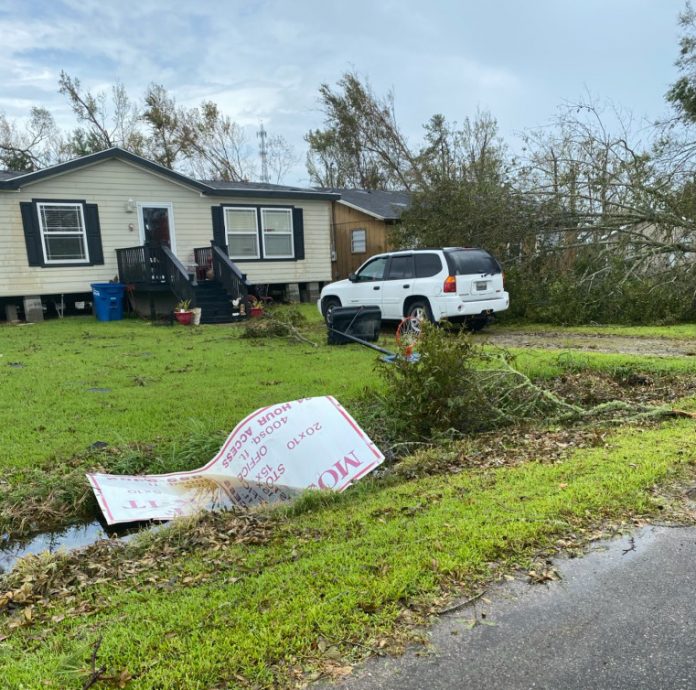
Susan Rice's 2007 Deer Valley Home in Lake Charles, La., stands with a few disrupted roof shingles and a bit of torn skirting after Hurricane Laura.

Susan Rice returned from her daughter’s home in Baton Rouge, a mind-numbing two-hour car ride through the devastation left behind by Hurricane Laura. She drove with “a pit in the stomach” feeling she likely lost her home — Again.

“I was on I-10, and the minute you get off you start seeing all of the destruction,” Rice said. “ You get a pit in the stomach. The mom and pop little businesses, that’s their income. Now they have none.

“I was broken-hearted to know that so many people were going to lose their homes,” she said. “I prayed over my house all night long. That’s probably what saved it, the Lord heard my prayers.”

Hurricane Laura made landfall overnight on Aug. 27, ripping through East Texas and western to central Louisiana with winds as high as 150 miles per hour. The storm was the strongest to hit the area in about a century, and was one of the strongest ever storms to make U.S. landfall, according to the National Weather Service.

The storm killed at least 16 people, most of them in Louisiana, officials said.

Upon leaving Louisiana, Hurricane Laura moved across Arkansas, downgraded to a tropical depression headed toward the lower Ohio Valley.

One Manufactured Home in Moss Bluff

“When I left my house before the storm, I felt like I was going to lose my home again,” Rice said. “That’s devastating, it just crushes you. You know you may come back to nothing.”

In September of 2005, Rice’s former home on that same spot along Ryans Road in an area known as Moss Bluff was destroyed by Hurricane Rita. The home she bought in 2007 to replace her “very old” site-built home was a new three-bedroom, two-bath manufactured home from Deer Valley.

“I upgraded on the cabinets and the siding, which is Hardie Plank. It’s very, very sturdy,” Rice said.  “Knowing that it is built to withstand a category 3, that did give me just a bit of hope. And it went through a category 4, so it’s certainly sturdy.

“I am blessed,” she said. “It really is a miracle.”

Devastation in Louisiana

manufactured home endures hurricane laura downed tree
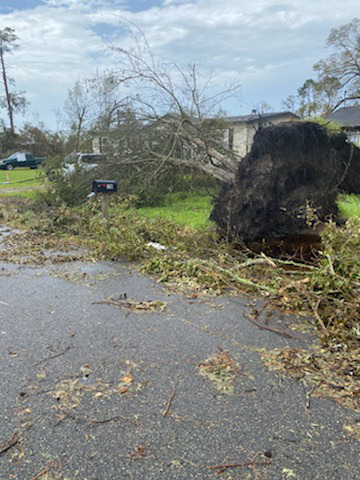
The Moss Bluff area is strewn with downed trees from the powerful gulf storm.

Rice’s experience evacuating Lake Charles and returning to her home amid the destruction was documented briefly among the accounts of many other Louisianans in a New York Times story on Hurricane Laura.

She said her friend’s aunt lost her home in the storm, and so too did her grandaughter’s grandparents from the other side of the family. She said only one of the three routes into her neighborhood were passable when she returned.

“There are trees all over the road and fallen on people’s homes. It’s so sad. I’m so sad for the people who’ve lost their homes, and you’re also happy because you still have yours,” she said. “I had one little leak and my daughter is helping me out. She is sending a maintenance guy with a generator, and a roofer is coming to do an inspection next week. I really lucked out.”

If she ever had to buy a new home again, Rice said, she’d return to R&R Mobile Homes in DeRidder, La., and get another new Deer Valley.

Durable Homes from Deer Valley

Deer Valley builds manufactured and modular homes from its facility in Guin, Ala., and sells the homes through a 15-state retail network.

Deer Valley Homes General Manager Chet Murphree said he is pleased but not surprised the company’s homes, even ones as old as the Rice home, are able to stand up to the largest storms.

“I received another homeowner testimony of how his family’ home stood fast against Laura,” Murphree said. “We are known for the heaviest built standard manufactured homes In the southeast with fastening systems that exceed the stability of stick-built homes. The installation is paramount as well.

“The Rice home, I expect was set to Wind Zone 3 specifications that ensure they withstand continual high-speed winds,” he said. “I also agree with Mrs. Rice that our sovereign creator always has a hand. God Bless Mrs. Rice and her family.”

Mobile Home Colors: Tips for Selecting Interior and Exterior Paints

Deciding on mobile home colors

The color of your home plays a big role in setting the tone–inside and out. Choosing the right paint will help create a space that you enjoy living in. So, when selecting mobile home colors, it’s important to keep a few basic principles in mind. 

If you’re considering painting your manufactured home, read these tips first. They’ll help you and your family find a color combination that you love and select high-quality paints that will keep a crisp look. 

Before the Paint Store

Before you walk into the paint or hardware store, take some time to establish what you’re looking for. First, think about whether you want to paint the inside of your manufactured home, the outside or both. This will determine the type of paint you need to buy and how much. 

Remember that there are many parts of your home that can be painted besides the walls. For exteriors, this might include your porch, front and back door, railings and shutters. For interiors, consider your baseboards, molding, doors, door jambs, window panes and ceilings. 

Many paint companies now offer free online paint visualizer apps. These are great for getting an idea of how certain colors will look in your home, and they’ll allow you to go to the paint store with a better idea of what you want. 

What Kind of Paint Do You Need?

Choosing mobile home colors

You’ll also need to ensure that you’re buying the paint products you need for successful painting. First, check to see if your home manufacturer recommends any specific brands or types of paint. These will usually give you the best results. 

Whether you’re painting the interior or exterior walls, you want paint and primer products that are designed for your wall materials. Vinyl siding, metal siding, and wood siding all require different types of exterior paint, and the vinyl-on-gypsum board that many manufactured homes use for interior walls requires high-quality paint products. 

You’ll almost always want to buy primer along with your paint. Primer helps the paint stick to your walls, and you’ll want to put on at least one coat (usually two) before painting any wall. 

When in doubt, work with the professionals at your paint or hardware store to find the best paint for your home’s needs. 

Choosing Exterior Mobile Home Colors

The exterior of your manufactured home will determine the first impression it creates, so most people want something elegant and welcoming. Here are some key tips for choosing exterior colors:

  • Some people choose bright mobile home colors such as red or purple for their exterior paints to give their homes a distinctive and vibrant appearance. Note that if you live in a mobile home park, your community may restrict the allowed color for exterior paints.
  • Pure white isn’t usually a good choice for an exterior color, as it quickly becomes labor-intensive to maintain. 
  • Cool colors such as off-white, beige and light blue can help keep your home cool in hot weather. These colors can also create a lovely look when combined with colorful landscaping. 
  • Painting your door, shutters, or porch railing is a classic trick for adding just the right amount of pop. Adding a splash of color in one of these areas will provide contrast and visual interest without appearing overly bold or busy.

Choosing Interior Mobile Home Colors

choosing interior colors for mobile home

  • Think first about whether you’d rather have a single consistent color scheme or paint different rooms in different colors. A single scheme doesn’t have to be boring. There’s all kinds of ways to add accents and offsets while keeping colors consistent. Painting rooms in different colors, however, can give your home a sense of vibrancy and excitement. 
  • Cool colors such as white and sky blue can provide an easy way to make your space seem larger and airier. Warm colors such as brown and burnt orange, on the other hand, create an appealing coziness. Some people like to use both, although it can take some careful analysis to make sure that they don’t clash. 
  • Think about the mental states that you associate with different colors. Soft, soothing colors such as blue are often found in bedrooms, while more energetic colors like orange are typically considered kitchen or living room colors. 
  • If you have kids, consider asking them if they want to choose a color for their bedrooms. Choosing how to paint their room can help kids feel like they have a personal space that’s all their own.

Want to learn more about maintaining, customizing, and improving your manufactured home? You’ll find it all on the MHVillage blog, from the basics of curb appeal to our complete guide for mobile home decorating.

4 Bedroom Mobile Homes: Spacious and Affordable

4 bedroom mobile home champion american freedom

When most people think of four-bedroom homes, adjectives like large, spacious, luxurious, and grand come to mind. Four-bedroom homes are often all of these things, but they’ve also traditionally been associated with another word: expensive. The typical price to build a new 2,000 square foot site-built home—a common size for a four-bedroom—ranges from $200,000 to $400,000 depending on location. 

However, today’s four-bedroom manufactured homes are changing the game in more ways than one. With numerous affordable and full-featured four-bedroom manufactured homes available on the market, the dream of a four-bedroom home is now within reach for more buyers than ever before.

Looking for four-bedroom mobile homes in your area? Select ‘4 bedrooms’ on the dropdown menu when searching for mobile homes for sale on MHVillage.

In this article, we’ll look at five of the most popular four-bedroom manufactured homes available on MHVillage. These homes provide the living space and reliable build quality that families need at an affordable price.

1. Champion Homes Memphis TE3276T

  • 2,281 Square Feet

4 bedroom mobile homes

Champion Homes is among today’s top builders of manufactured homes, and the Memphis is a perfect example of why. A modern combination of kitchen, dining, and living room areas provides a flowing family space that fosters togetherness, and tray ceilings give the space a roomy feel.

4 bedroom mobile home bathroom

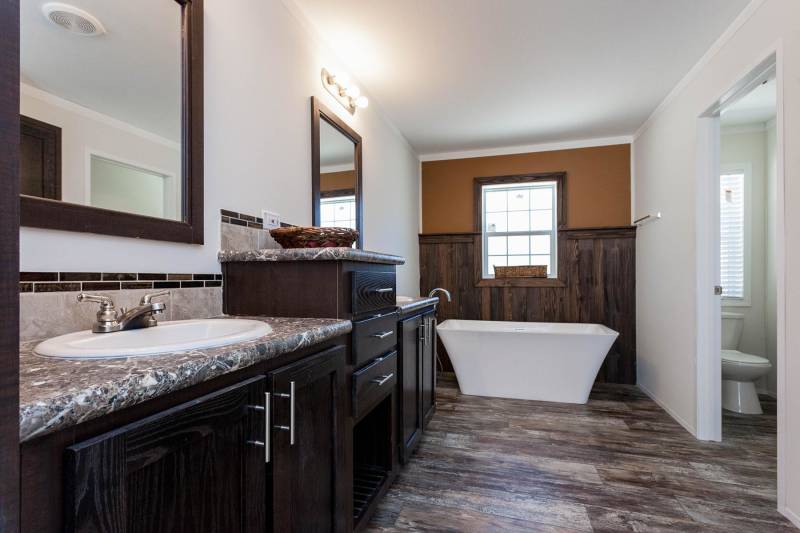
The Memphis’s living spaces are designed for graceful comfort, and the master suite includes a bathroom with soaker tub. Champion Homes even offers the option to add a fifth bedroom and third bathroom for families who need even more space.

2. Fortune Home Gold Star 2880 201

  • 2,026 Square Feet

4 bedroom mobile home living room

The classic ranch house never goes out of style, and the Fortune Homes Gold Star brings a spacious take to this perennially popular design. An ample living room leads into an eat-in kitchen, and pleasant architectural accents like columns provide visual flair.

4 bedroom mobile home kitchen

The Gold Star’s kitchen includes an island countertop and beautiful natural finish cabinetry. Those who work from home will love the optional built-in desk in the kitchen.

3. Homes of Merit Willow Manor W0764B2-0

  • 2,305 Square Feet

4 bedroom mobile home willow manor

The Willow Manor radiates classic Southern charm, but combines its beloved traditional elements with an expansive and modern design. This home features a separate living room and family room with a built-in fireplace, and its eat-in kitchen is the stuff of dreams.

4 bedroom mobile home master bath willow manor

The feeling of comfort and luxury continues in the Willow Manor’s bedrooms and bathrooms, which feature gorgeous countertops and an oversized soaker tub. It’s the perfect home to bring Southern hospitality into the 21st century.

4. Champion Homes Commonwealth 211

  • 2,305 Square Feet

4 bedroom manufactured home kitchen commonwealth 211

In the Commonwealth 211, cozy and roomy feel right at home together. The kitchen and dining room flow right into the living area to create an enjoyable space that will be full of good smells around dinnertime. A classic farmhouse/barn decor style brings a touch of Americana to this open-plan design.

4 bedroom mobile home master closet

And if you want closet space, the Commonwealth will make you jump for joy. The master bedroom includes a truly impressive closet, with an optional built-in mirror and cubby.

5. Champion Homes American Freedom 3276R

  • 2,312 Square Feet

4 bedroom mobile home champion american freedom

The American Freedom lives up to its name with abundant space for work, play and life. The kitchen is one of the stars of the show here, with an island countertop, up-to-date appliances and a chic vibe.

4 bedroom mobile home master bedroom

The American Freedom’s four bedrooms are generously sized, and the master suite includes pleasing touches like a sliding barn door leading to the bathroom. The bathroom itself, meanwhile, features a freestanding tub and a luxurious walk-in shower.

6. Homes of Merit Pine Manor 0764D

  • 2,305 Square Feet
  • Available in: Florida

Homes of Merit 4 bedroom mobile home kitchen

This airy four-bedroom design from Homes of Merit is as cheerful as it is spacious. The Pine Manor’s modern eat-in kitchen includes aesthetic touches like shiplap wainscoting for a rustic look, and a tile backsplash and island countertop that make this a classy and beautiful kitchen.

homes of merit 4 bedroom master bath

The Pine Manor’s bathrooms and bedrooms also make everyday home spaces into places of serenity and comfort. The bathroom is particularly eye-catching, with its free-standing tub and built-in privacy water closet.

Find the Perfect 4 Bedroom Mobile Home

It’s never been easier to afford a four-bedroom home for your family. For more manufactured homes that are large and in charge, check out our guide to quadruple wide mobile homes. Or, to find your perfect four-bedroom manufactured home, view our mobile homes for sale or mobile home floor plans and sort by bedrooms.

FAQs: Solar Panels for Mobile Homes

solar panels for mobile homes and manufactured homes

An eco-friendly, energy-efficient home is an appealing option for many homeowners today. ENERGY STAR® Certified manufactured homes are one great option for a home that’s easier on the planet and saves money on utilities. But for those who want to take things a step further, solar panels can be a great investment for powering your manufactured home sustainably.

In this article, we’ll answer several frequently asked questions about solar panels for mobile homes. You’ll find key information here about the cost of solar panels, solar panel installation and much more.

Can you install rooftop solar panels on a manufactured home?

Not usually. PV panels are heavy and have specific structural requirements. In addition, rooftop solar panels for mobile homes may not be legal in every jurisdiction, and every mobile home park.

What kinds of solar panels are appropriate for a manufactured home?

Although standard rooftop PV panels usually can’t be installed on a manufactured home, a homeowner does have some options, such as:

  • In some cases, another structure such as a detached garage or enclosed patio may be suitable for a rooftop PV array. Always consult both the manufacturer of the structure and the PV manufacturer first to learn if your structure is a good choice for solar panel installation.
  • If the lot is sufficiently large, homeowners can purchase a ground-mounted photovoltaic system, in which the PV panels are mounted in the yard. (Note that you’ll need a substantial amount of space for this option, as even a relatively small system can occupy several hundred square feet.) For many manufactured homeowners, this is the easiest and most cost-effective solar panel option.
  • Solar roof shingles are miniature solar PV cells the size of a typical roof shingle, and they can be a great alternative to traditional roof-mounted PV panels. Solar shingles have recently become substantially more affordable (particularly with solar tax credits), and they could save some homeowners as much as 40 to 60 percent on their electric bills.
  • Solar-powered water heaters are another popular option that use stored energy from the sun’s heat to provide cost-effective hot water on demand.

For more information on selecting a solar system and whether solar is right for you, see the FTC’s guide to solar power for your home.

How much does it cost to outfit a manufactured home with solar panels?

The exact cost of installing solar panels on a manufactured home lot will vary widely according to the size and nature of the installation. Remember that solar capacity is a long-term investment, and larger solar panel arrays provide homeowners with the potential to capture greater savings when installed correctly.

solar panels for mobile homes

You can calculate the cost of a mobile home solar panel system by using one of the many solar panel cost calculators available online (although you should treat the amount as an estimate until you get an actual quote). Solar panels for mobile homes must be installed by trained professionals, so remember that you’ll also need to pay installation costs.

Note that several tax credits are available for homeowners who install solar panels on their homes, so the final adjusted cost of these systems will almost always be lower. The main tax credit for solar panel owners is a federal credit called the investment tax credit for solar power, but your state government may also offer additional tax credits.

How does a solar-powered water heater work?

Some people reduce their heating bills by using solar-powered water heaters. A solar-powered water heater transfers the sun’s heat energy to a water heater tank, which provides an excellent medium for storing heat. Solar water heaters come in several varieties that can cost anywhere from $2,000 to $5,000 including installation, and they can be a good option for manufactured home owners who aren’t ready to invest in full-scale solar yet.

What is community solar?

Community solar power is an alternative way of powering your home through solar power without installing panels on your property. Investors build community solar panel farms on which homeowners can purchase access to a panel. A homeowner then receives a credit on their electric bill for the amount of power produced by the purchased panel, and the solar company bills the homeowner (ideally at a lower rate) for the portion generated by the solar panel. Community solar is an increasingly popular option for homeowners who don’t have the option of installing solar panels.

mobile home delivery process
Photo courtesy of UMH Properties.

Are there ways to decrease energy bills other than solar panels?

Yes! First, as previously mentioned, many outstanding ENERGY STAR® Certified manufactured homes are available that are specially designed to provide energy efficiency. In addition, homeowners can improve their manufactured home’s energy efficiency by applying some simple tips from the experts at MHVillage. Whether it’s solar power or energy efficiency hacks, there’s almost always a way to reduce your manufactured home’s carbon footprint and save money at the same time.

Buying a Single Wide Mobile Home

Buying a single wide mobile home

Purchasing a new home is an important milestone in anyone’s life. During these times, we understand that now more than ever, your budget matters. If you have always aspired to own your own home and would like to do so without breaking the bank, buying a single wide mobile home may be a fitting solution.

Single wide mobile homes are strong, cost-effective options that can fast track your path to homeownership. If you are looking to explore this particular type of housing as a first-time buyer, you likely have a few questions.

To get you started with some initial research, here is a brief overview of all things single wide homes.

Single Wide Basics

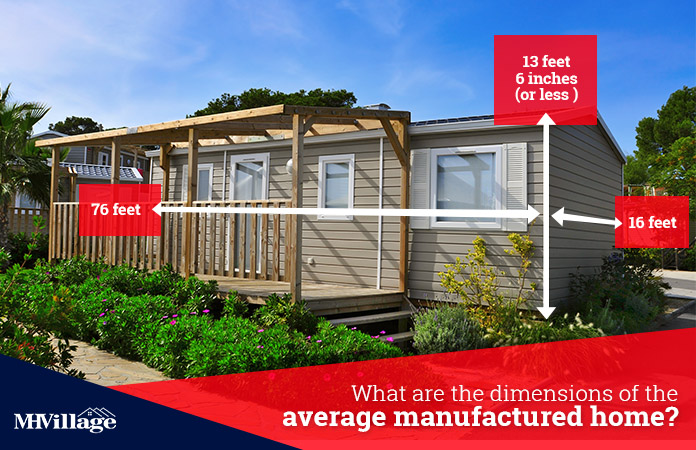
Today’s single wide homes are 12 to 18 feet long, 50 to 80 feet wide, and offer around 720 to 1,400 square feet of living space. These residences are generally known for their compactness, but in reality, they are often larger than most apartments. 

Single wide mobile home sizes

Today’s single wides are made with such care and expertise that it has become increasingly difficult to tell the difference between a modern single wide and a smaller traditional-style home. These small but spacious dwellings have contemporary features, energy-efficient fixtures/appliances, and overall new flow and design. Moreover, these particular types of mobile homes are easy to customize or upgrade. 

When considering transportation and other particulars, it’s beneficial to understand all that goes into shipping a brand new single wide mobile home from the factory to your intended homesite or lot in mobile home community. With single sections, delivery and installation are basically seamless. Due to there size, fewer resources are required to get your new home up and running. Similarly, setup typically requires less manpower and materials than other larger options will (double, triple wides).

Why Buy a Single Wide?

So, we’ve touched on a few benefits, but there are several other advantages to highlight:

Cost

For starters, one of the clear advantages of that single wides have over other types of housing is they are the less expensive option. When compared to double wide homes or multi-section homes, many buyers prefer single wides because of their affordable pricingEven an affordable luxury townhouse, apartment, or condo is likely to cost you more than a single wide. If you are looking to cut back on your overall monthly expenses, these homes are an excellent choice.

Space

Perhaps the most compelling advantage that single wides offer is space. More specifically, the amount of space that they provide for the cost. A 1200 square foot single wide offers about as much room as a traditional, 2 bed, 2 bath home. Many homeowners who live in single-section homes often pleasantly surprised by how much extra room they have. The additional space offers flexibility with how you decorate your home interior and store your belongings.

When you consider the price per square footage, single wides are a strong option for getting the most value for your money. 

Variety

Single wides come in a large variety of layouts and floor plans. While they don’t offer quite as robust of a selection as double wides, there are plenty of options available for buyers of all types. As mentioned earlier, modern single wides are easily customizable and can accommodate many modifications, upgrades, or additions after the purchase.

Privacy

In addition to cost and space, single wides also offer privacy. One of the biggest reasons why many renters leave the apartment lifestyle is the desire to have their very own space. When you own a single wide you can enjoy freedom away from sharing walls with neighbors and living in close quarters. 

Finding the Perfect Single Wide

Today, tracking down the single wide of your dreams is easy. More and more buyers are finding their best options online, which makes home shopping simple and convenient. On MHVillage, you can find thousands of single wide mobile homes for sale, with a search-friendly database that allows you to filter home listings by location, size, price, specific features, and much more.

Finding single wides for sale

You can also find great single wide homes by searching through our extensive selection of mobile home parks. You can get all the info on several mobile homes at once, contact a representative, ask questions, and take in-depth virtual tours.

With that said, while you are browsing online for your future home, there are a few things you should consider:

  • Determine if a new or used single wide is best for your needs. If you’re looking to buy new, you’ll want to browse our selection of single wide mobile home floor plans to determine what type of layout is best suited for your lifestyle.
  • Go into the buying process with a solid understanding of your financial situation and what you’re able to afford.
  • Be sure to do your due diligence when browsing homes. You may find several options enticing early on, but it’s important to spend time comparing different options in order to find the right single wide home that checks all of your boxes.

Lastly, make sure to understand what type of mobile home financing options are available to you ahead of time.

Financing a Single Wide Mobile Home

You have a handful of options when it comes to financing mobile homes. 

Common mobile home financing includes personal loans, traditional mortgages (FHA, Conventional), chattel mortgages, or government loans (VA or USDA Rural Development loans).

If you are buying a single wide through a mobile home community or dealer, it’s common for them to recommend options as well.

As is the case with financing any home, there are minimum mortgage requirements for each loan program. Thus, it is vital that you determine which loan scenario works best for you. For example, many of the above-mentioned loan types have minimum credit conditions, down payments, and land requirements. There are also specifications to consider with each mobile or manufactured home loan, such as the size of your home, whether it needs a permanent foundation, etc.

The breadth of options you will have access to for your future single wide home ultimately comes down to your financial situation and what loans you can qualify for.

Final Thoughts

At the end of the day, buying a single wide mobile home is a big decision, especially if this is your first time purchasing a home. Currently, there is a wealth of affordable housing options across the country, and financing is, for the most part, readily available. As a result, there is no time like the present to begin your search.

MHVillage has the largest selection of manufactured and mobile homes for sale in the nation. Just visit our advanced search page to start browsing our selection of home listings. And for more buying tips, be sure to check our new mobile home buyers guide.

How to Sell a Mobile Home in Texas

Mobile Home Living
Photo courtesy of Sun Communities.

The Texas housing market is red-hot and shows no signs of slowing down. In an active market with high home prices, many buyers will be looking for a great home at a more affordable price, which is great news for anyone selling a mobile home in Texas.

To get the best price for your manufactured home, it’s important to have the right tools and knowledge at your disposal. In this quick guide, we’ll talk about the basics of how to sell a mobile home in Texas and how MHVillage’s tools for mobile home sellers can help make your sale a success.

Who’s Selling Your Home?

The first decision that most manufactured home sellers in Texas must make is whether to sell their home themselves (known as “for sale by owner,” or FSBO) or sell it through a mobile home real estate agent.

If you live in a manufactured home community, the community’s sales department will almost always handle the sale for you. If that’s the case, you’ll work with park sales representatives to make sure your home is ready to sell, coordinate showing times and find potential buyers.

Sellers who don’t live in a manufactured home community must decide whether to sell by owner or use a Texas real estate agent. A real estate agent will charge commission, but will do the work of connecting with buyers, showing the home and creating marketing materials.

Selling FSBO, meanwhile, can be a big potential cost-saver since you’ll be skipping commission fees for an agent, but the process involves more legwork for the seller. Make sure to avoid the many common for sale by owner mistakes such as negotiating too hard and going in without an inspection.

Appraisal and Inspection

A professional manufactured home appraisal and inspection are key steps in the process of selling a manufactured home. Anyone interested in selling a manufactured home in Texas should strongly consider having an appraisal and inspection.

mobile home appraisal

Professional appraisers are trained to evaluate the key factors that determine a home’s value, including model, age and condition. Professional inspectors, meanwhile, give buyers confidence and help spot critical repairs that the seller may need to address.

A great first step is finding the book value of your manufactured home. That’s why MHVillage offers a free Datacomp book value for every manufactured home listed on our site. However, to truly ensure that your manufactured home is ready to sell and to establish a firm value, it’s a good idea to have a professional appraisal and inspection.

Marketing Your Mobile Home

Finding the right buyer for your manufactured home in Texas is easier when you advertise your home and know how to present it attractively–whether that’s through curb appeal or savvy marketing.

Curb appeal is a big part of successfully presenting your home and, fortunately, there are some easy techniques to boost manufactured home curb appeal. A new coat of paint can go a long way, as can replacing your manufactured home’s siding and doing some basic yard work.

MHVillage also gives manufactured home sellers a listing that’s packed with opportunities for marketing. See our guides to taking pictures of your manufactured home and writing a better home description for tips on practices that can help optimize your listing.

Texas Mobile Home Paperwork

In Texas, transactions involving manufactured homes are regulated and recorded by the Texas Department of Housing and Community Affairs (TDHCA). The TDHCA sets standards for the sale and installation of manufactured homes.

The most important document for selling a mobile home in Texas is called the Statement of Ownership and Location, or SOL. These documents record all of the following:files

  • Sale, transfer and current ownership of a manufactured home
  • Whether a home is titled as personal or real property
  • The home’s physical location
  • Outstanding liens

A revised SOL must be submitted to the TDHCA at least 60 days before the sale date. The full SOL can be tricky to fill out, so make sure to read the TDHCA’s SOL application instructions.

The seller must also provide the buyer with a written warranty and disclosure statement that describes the home’s physical condition and certifies its habitability. Other documents may also be required, so check with your local government to learn the specific requirements for your municipality.

If you’re wondering how to sell a mobile home in Texas, MHVillage provides the easiest and fastest way to do it, thanks to our easy-to-use interface and user base of over 25 million unique visitors annually. For more tips on how to sell a mobile home in Texas, be sure to look at our Mobile Home Seller’s Guide. It’s packed with useful resources for home sellers.

Do You Pay Sales Tax on a Mobile Home Purchase?

mobile home sales tax

In most states and cities, sales tax is a fact of life. On almost every purchase from a restaurant meal to a new car, you’ll pay a sales tax that funds critical government infrastructure and services.

So, do you pay sales tax on a mobile home purchase? The answer varies widely according to which state you live in. In most U.S. states, the answer is yes—sales and use tax does apply to mobile home purchases.

However, that’s not the full story. It’s important to understand that there are numerous complexities at the state level that can affect the amount of mobile home sales tax you pay. In this guide, we’ll briefly examine what they are.

Sales and Use Tax on Mobile Homes

Most U.S. states levy a sales or use tax that applies to manufactured home sales. However, mobile home sales tax rates vary widely, both between individual states and depending on the legal titling status of the manufactured home.

First, let’s establish the difference between sales tax and use tax:

  • Sales Tax: Collected by the seller at the point of sale
  • Use Tax: Collected by the government directly from the end user

A manufactured home dealer will typically collect sales tax at the time of the transaction. In some states, dealers aren’t allowed to collect sales tax directly, so they’ll include the tax in the price of the home instead.

Homebuyers who purchase a manufactured home from a private seller or from another state will often have to pay a use tax to their state or county government after the purchase is completed. You’ll need to contact state or county revenue authorities to determine the correct amount of tax to pay and where to send it.

Personal Property vs. Real Property

Sales and use tax usually only apply to manufactured homes that are titled and sold as personal property. Whether used or new, a manufactured home titled as personal property will be subject to the mobile home sales tax laws of the state. Typically, you’ll pay the statewide sales tax rate plus the local sales tax rate on a mobile home transaction, much as you would when buying any other type of personal property.

Sales tax on mobile homes
Amherst by New Era Homes

If you’re buying a pre-existing manufactured home that is attached to a permanent foundation, your home is considered real estate rather than personal property. Your state may or may not require sales tax on real estate sales. However, many states do levy a real estate transfer tax on real estate transactions and/or a capital gains tax if you sell your home at a profit. You can check the list of real estate transfer tax states to find out if your state has a transfer tax and calculate your capital gains tax using one of the many calculators available online.

Which States Charge Sales Tax on Mobile Homes?

Before you begin the process of buying a manufactured home, you’ll want to be aware of whether you’ll have to pay sales tax and the amount of tax you’ll owe. Usually, the easiest way to find this out is to contact the seller you’re working with or to find it on your state government’s website.

These five states charge no state-level sales tax on purchases of any kind:

  • Alaska
  • Delaware
  • Montana
  • New Hampshire
  • Oregon

If you don’t live in one of the above states and your manufactured home is titled as personal property, you’ll need to research mobile home sales tax in your state. Keep in mind that, whichever state you live in, your city or county may require additional mobile home sales tax on top of what you owe the state. For the most accurate and up-to-date information on mobile home sales tax, consult your mobile home dealer or a real estate attorney.

Tax Percentage

Here are some facts about what you’ll pay for mobile home sales tax in some of the states with the largest numbers of manufactured homes:

  • Alabama: 4 percent state sales tax, plus local taxes
  • Arizona: 5.6 percent state sales tax, plus local taxes
  • California: 7.25 percent state sales tax, plus local taxes
  • Florida: 6 percent sales tax, plus local taxes
  • Louisiana: 4.45 percent sales tax, plus local taxes
  • Michigan: 6 percent sales tax, no local taxes
  • Texas: 3.25 percent mobile home-specific sales tax

For more tax guidance for manufactured homeowners, see our guide to mobile home property taxes. And to learn about the other requirements for closing on a manufactured home sale, read our guide to closing on a mobile home.

Budget-Friendly Mobile Home Additions

How to Paint Vinyl Mobile Home Walls

One of the great things about manufactured and mobile homes is that they are relatively easy to expand. But, by no means can we regard these expansions as cheap. Some home expansions can easily cost a fortune, even though you are dealing with a manufactured home. Luckily, there are certain budget-friendly ways to expand with mobile home additions. Today, we will explore what they are and how to implement them properly.

Understanding Mobile Home Additions

Adding on to a manufactured or mobile home is much cheaper than doing so for a traditional site-built home. However, that doesn’t mean that it comes cheap. Any home expansion is bound to be costly, especially if you want it properly handled. And, depending on how much you want to expand, it can end up costing you a fair bit. So, in order to make your mobile home additions budget-friendly, you need to research and organize it properly. Only then will these cost-effective ways actually be fruitful.

How to Expand a Mobile Home – The Approach

In order to cost-effectively expand a manufactured home, there are a couple of important steps that you need to take. Remember, there is no golden solution here that is going to cut the cost of expansion if half. Instead, there are seemingly small issues that, if tackled properly, pile up into a decent amount of savings. So, do yourself a favor and follow each of these steps with due care if you want to stay within your desired budget.

Affiliate Link Below – MHVillage receives a small commission from the seller for purchases made through this link.

Finding a cost-effective contractor

The first thing to do is to find a cost-effective contractor. The important thing to note here is that there is a difference between a cost-effective contractor and a cheap one. A cost-effective contractor will find a way to properly expand your manufactured home at a reduced cost. On the other hand, a cheap contractor will only try to make their services as cheap as possible. Therefore, they will be more than happy to forgo the quality of materials and the quality of work necessary for a decent home expansion. So, if you want to expand your home properly, find a cost-effective contractor.

expanding a manufactured home contractor

A capable contractor will help you find ways to build additions for a manufactured home while staying in budget. We suggest that you start looking for your contractor online. Ideally, you want to find someone who has ample experience with manufactured homes. 

The more experience they have, the better they will be able to give you sound advice on how to save money. Plus, because of their experience, they will be able to find a way to safely expand your home in a cost-effective manner. Also, do not neglect to check online reviews and to make sure that your contractor has the necessary permits.

Using inexpensive materials

Once you’ve made sure that you have a cost-efficient contractor helping you out, your ways of reducing other costs boil down to the materials that you’ll use. It is important to note that the cost-effectiveness of materials is a tricky subject. While some may seem like a small investment, they don’t provide much durability and you might have to replace them soon. Meanwhile, some materials that require a larger investment can prove to be much more durable. Therefore, in the long run, they will turn out to be the budget-friendly option. Alongside that, you need to consider the area that you are in and the regular weather conditions. 

materials for mobile home additions

Roofing is especially important to consider as a small difference in price can be a large difference in durability.

Some Budget-Friendly Mobile Home Additions

Now that you know the basic principles of expanding a manufactured home, you should have little trouble with coming up with creative ways to do so with your own. One thing we would recommend is that you carefully consider how much room you need, as every extra square foot is going to cost you. A good idea is to first declutter your home and see whether expanding it is actually necessary. But, if it is, here are some budget-friendly ways to tackle it.

Roof over

Let’s say that you need to renovate or repair the roof of your mobile home in the near future. Of course, you can simply call up a roofing company and have professionals deal with it. On the other hand, you can use this opportunity to expand your home. The factor that is going to save you money here is that you can extend your new roof over the expanded property. Just find a contractor that can deal with both roofing and home expansion, and you are bound to be pleasantly surprised by the result.

mobile home additions roof over

Frontporch

If you want to build additions for our mobile home in order to get a bit more living space, we suggest that you consider installing a front porch. Out of all the home expansions, this the most cost-effective one since it doesn’t require wall installation. A front porch can be a great place to lounge, organize BBQs, and increase your time spent outdoors. So, if you live in a warm climate, definitely consider adding a front porch.

Storage shed

The most common reason why people feel cluttered in their homes is due to having too many items. Most of them don’t even realize that their homes are filled with clutter, and simply believe that adding more space is the necessary step. Well, while adding more living space to your home would help, it isn’t the most cost-effective option. Instead, we suggest that you add a storage shed. There are sites like bluebellmovingandstorage.com where you can learn how to use your storage space in the best way. This home expansion is a cost-effective way to make your living quarters much more pleasant.

mobile home additions storage shed for space

A storage shed can be all you need to make your home feel more spacious.

The final tip about saving money with mobile home additions

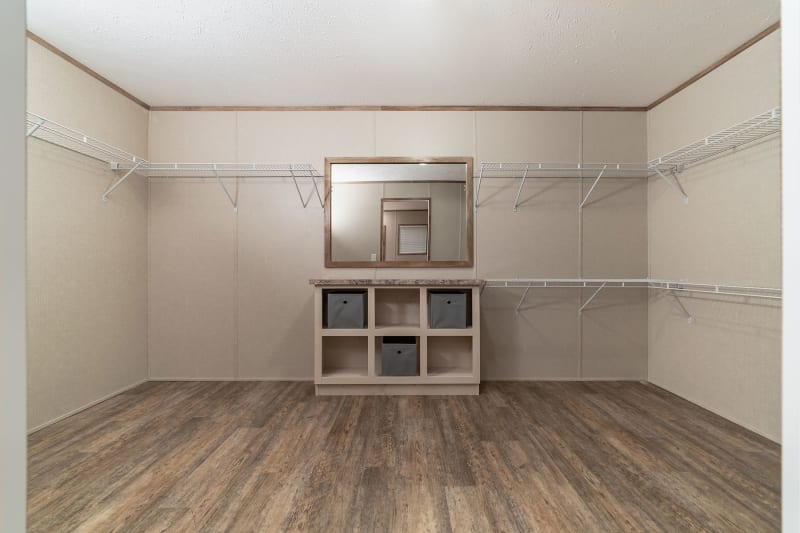
The final thing we would like to mention about budget-friendly homes is that being energy-efficient can save you a fortune. By this, we primarily mean that you need to install top-notch insulation. Most people don’t bother with this and end up wasting a large amount of energy when heating/cooling their homes. Trust us when we tell you that having a properly insulated home is a must, especially if you are considering your home budget.

Article written by Sophia Perry
EVENTS

Tour New Manufactured Home Models at the Novi Home & Garden Show, March 28...

If you live in or around Southeast Michigan, then your opportunity to tour the newest manufactured homes is here!The Novi Home & Garden Show,...
Visit The Novi Home Show and Tour Six New Model Homes, Oct. 11 –...

Heads up, Southeast Michigan! The Novi Home Show will host six stunning manufactured homes for public display at the Michigan Manufactured Housing Association (MMHA)...

Tour Six New Manufactured Homes at the Novi Home Show this Weekend, Oct. 7...

This weekend, October 7th through the 9th, 2022, is your opportunity to tour six model homes as part of the Manufactured Home Showcase.  The Showcase,...