Mobile homes, manufactured homes, and modular homes are three modern housing options. They offer a distinct set of advantages over traditional homes, also known as “site-built” or “stick-built”. Though the three housing types are different from one another, they do share some commonalities.
The primary one is that mobile, modular, and manufactured homes are built in a factory and then transferred to their permanent site via ground transportation, which is why they are often referred to as “factory-built” or “prefabricated” homes.
Let’s cover a few of the other key similarities and differences between these three unique housing types. This will help you determine whether one of these home types is a good fit for you.
Mobile Homes: Built Before 1976, Towed When Transported
This technically only refers to transportable homes built before June 15, 1976.
Unlike modular homes, mobile homes are built with a chassis and wheels.
They are built in a single piece in a factory and transported as a single unit.
Manufactured homes, mobile homes, and modular homes may all fall under the umbrella of the term “mobile home” because they are mobile, leaving the factory to their final destination. Technically, however, this is inaccurate. A home can only be considered “mobile”, at least by the standards of the U.S. Department of Housing and Urban Development (HUD), if it was built before June 15, 1976. This is when HUD passed a set of building standards governing manufactured homes.
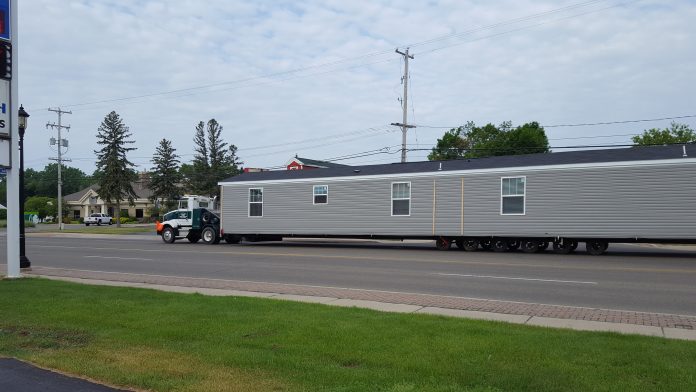
The other big component that makes mobile homes different is the way they’re built and transported. Mobile and manufactured homes differ from modular homes because they are built on a chassis and wheels. This allows them to be towed behind a vehicle for transport to their final destination. It is one reason why they are sometimes referred to as “trailer homes”. On the other hand, modular homes are hauled on the beds of trucks rather than their own chassis.
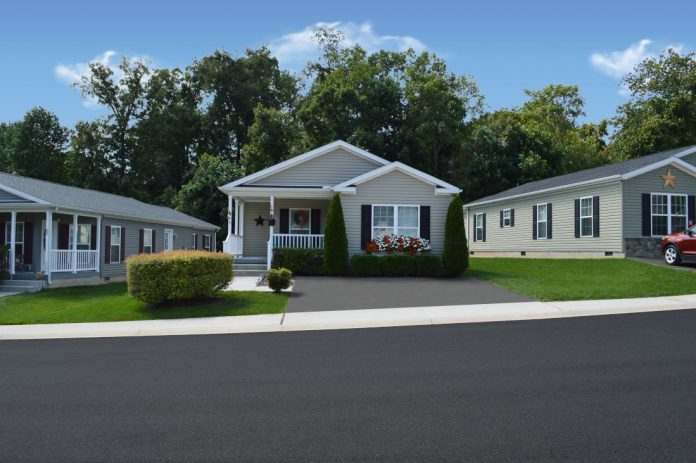
A manufactured home in a community. Image provided by UMH Properties.
Manufactured Homes: The Modern Term for ‘Mobile Home’
Built after June 15, 1976, according to HUD standards on design and quality.
Built with a chassis and wheels so they can be towed to their permanent site.
According to HUD, must be at least 8 feet wide by 40 feet long, or 320 total square feet.
Built in a single piece in a factory and transported as a single unit.
For the industry and the general public, it’s common to interchange the terms “mobile home” and “manufactured home”. Technically, though, manufactured homes must have been built after June 15, 1976, and must meet a set of rigorous safety standards set forth by HUD. Indeed, today’s manufactured homes are much more durable, safe, strong, and eco-friendly than their pre-1976 predecessors, thanks to these regulations and subsequent HUD code updates.
Some of the guidelines that manufactured home builders must follow include the height of the rooms and ceilings — manufactured homes must have ceilings at least seven feet high — as well as the size of certain rooms, including single- and double-person bedrooms. Additionally, HUD guidelines cover certain safety requirements, such as having a fire alarm in certain rooms and using fire-retardant materials, as well as standards regarding plumbing and electricity.
A modular home arrives at its destination on the back of a truck in modules and is assembled on site.
Modular Homes
Built in multiple pieces in a factory and transported in multiple shipments to the final home site.
Built to the standards of the local and regional housing codes of its final destination.
Transported on truck beds rather than towed on designated chassis and wheels.
The modular home is yet another type of home that falls under the prefabricated umbrella. However, it differs from the mobile or manufactured home because it is generally built in multiple pieces and may be transported to the home site in multiple shipments. As its name suggests, modular homes involve several modules that are then put together to form the home design.
Because they are put together on-site, modular homes conform to all state, local, and regional building codes according to their final destination site. The multiple components and handling of building codes make modular homes a bit more flexible in terms of size and design than manufactured homes.
Read more about modular homes here.
Which Is Best for You?
As you can see, your search for the right factory-built home really comes down to two main options: manufactured and modular homes. Regardless of which style you prefer, you can count on a home that’s affordable, flexible, and customizable to your liking when you opt to go the factory-built route. MHVillage is always here to assist you in your hunt for the ideal dwelling.
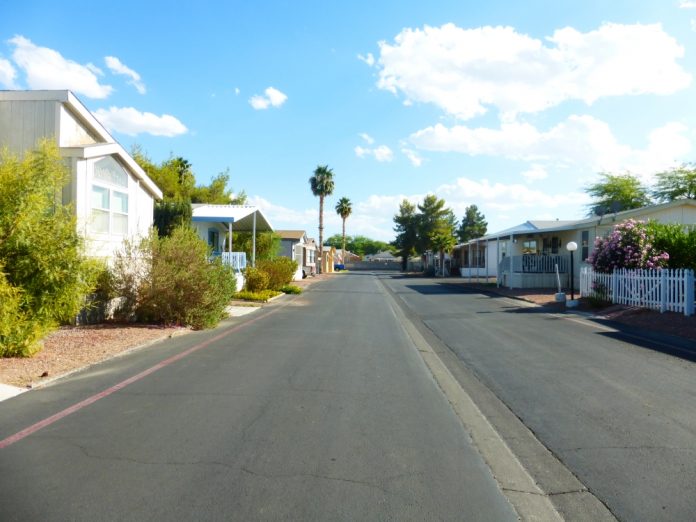
Today’s mobile home community has come a long way. People who never thought they would enjoy the mobile home community lifestyle are discovering the secret many of us have known about for years. Today’s mobile homes are well built, full of great design details, and are a great place to call home.
In addition, studying the 10 factors below can help you narrow down the choices and help find the right mobile home community for you.
Location, Location, Location
It’s an old saying, but these three things are essential to think about when buying a new home: location, location, location. Discovering a place that is perfect for your lifestyle and is affordable is the No. 1 priority in your home search. Excellent schools, public transportation, grocery stores, medical facilities, and recreational areas are all important factors. Where your potential new home is sited in the community is also important: how big is the lot, how close are the neighbors, are you on a busy street, etc.
Life And Style
There are limitless choices to make when looking for a new home and community, including whether to lease or own your new home. Are you looking for a resort-style community with a pool, tennis courts, a large clubhouse or other amenities? Or are you looking for a place that only offers essential services? Is it an age-restricted 55 plus community, family-friendly community, or all-age community? If you have a four-legged family member, is the park pet-friendly?
Quiet, Please
If privacy and a calm environment are critical to you, make sure your new home isn’t by the play yard, bus stop or pool. Try and visit your potential new home during a busy time of day and see how much outside noise can be heard inside.
Day and Night
It’s important to not only visit the community during office hours, but to come back at night and early in the morning to get an idea of how busy the community is at those times. If parking is a consideration, it’s essential to see how many parking spaces are available at night and on weekends. Does the community have assigned parking, or is it first-come, first-served? Is the community gated? If it has security, is it on-site at all times or during specific hours?
Being Social
Are you interested in getting involved in your new community, or would you rather be more private? If the community has a Facebook page, calendar of events, or newsletter, you can get an idea of how many events are happening each month, and how well attended they are.
Extra, Extra!
It’s important to know ahead of time if there are any extra charges that might come up. Ask if they have rental increases and if they are capped or open-ended.
Utilities
This is something that a lot of people forget to ask about until they move in and get a bill or have problems. Are the utilities in the community metered? Does it have city or well water? Are septic tanks used, or are you hooked up to the city sewer system? When were the water and sewer lines installed or replaced? Be sure to inquire about wi-fi as well. Is it included in the lot rent, or available at a minimal charge?
Rules are Rules
It’s important to know what the rules are in each mobile home community, and how consistently management enforces those rules. How do they handle a resident who doesn’t maintain their yard? Can you have a garden? Is parking on the street allowed? Can you put up a fence? All of this should be covered in writing, and a copy should be available for you. Management is a critical consideration when choosing your new home. You will probably have more interaction with them than anyone else.
Home Sweet Home
There is nothing more exciting than stepping into a home and knowing that it’s the perfect home for you. It’s great to know how old the house is, who the manufacturer is and if any improvements have been made. Check under the sinks and in the bathrooms to look for water damage. If possible, hire a home inspector who is familiar with factory-built homes to find out if the home has any issues you need to know about before you buy.
Moving Forward
Now, the most essential thing: moving in and enjoying your new home! There is nothing more rewarding than owning your own home. And unlike apartment living, you can paint walls, change out flooring and make your home as unique as you are.
Panelized Homes Start on the Factory Floor and are Finished On-Site, Saving Time and Money
Panelized homes are most similar to modular homes. Each is a type of “systems-built” home. This means they are largely factory-built, but receive final construction on-site and must meet state and local building codes.
Manufactured, modular, panelized, pre-fab… you may think these terms are different ways of describing a home that wasn’t built on-site. However, each term refers to different types of manufacturing processes.
Panelized homes are shipped to the building site in panels and then constructed. Meanwhile, modular homes are shipped in modules. This is a slight difference, but one that can influence how customizable the home is.
Unlike most manufactured homes, they are on a permanent foundation and cannot be moved later.
Here are a few reasons homebuyers may want to consider a panelized mode of construction:
Panelized Products Merge the Best of Prefab, Stick-built
Panelized products combine some of the best qualities of other types of prefabricated homes with attributes of stick-built homes. The floors, walls, roof trusses — and at times decks, windows, and siding — of panelized homes are constructed off-site. However, the home is built on-site. Panelized homes look just like something built on-site. And they can accommodate a great spectrum of floor plans, a number of bedrooms and custom options.
Panelized Homes Save Time, Money
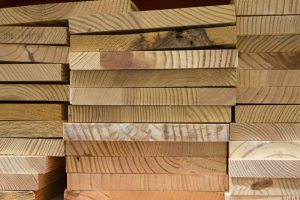
Beyond weather, stick-built construction naturally runs into delays due to material delivery and subcontractor schedules. These challenges are avoidable in the factory.
Like manufactured homes, panelized products benefit from the building process being indoors and unaffected by the season. Home-building factories also have ample storage and staging space. This allows for an enhanced workflow through bulk purchasing and well-maintained delivery programs.
A pre-assembly, or home kit, can be site constructed more quickly than a home built all in one place. This reduces the need for labor that can be so difficult to find and manage. And it reduces labor costs.
Once the roof trusses, floors, and walls of the home are out of the factory and at the building site, panelized homes can be “dried-in”, or weather-proofed, in just a few days, as opposed to weeks with stick-built construction.
Panelized Homes Are Sturdy
Instead of being solely built in a factory and regulated through HUD, like manufactured homes, panelized homes follow state and local building codes.
The components of panelized homes need to withstand a trip down the highway, akin to manufactured homes. To accomplish this, the panels often are built with 20% to 30% more material than a stick-built home. In particular, this means thicker drywall, which makes the panelized home perform better in extreme elements than other options.
Added material and transportation can mean more upfront cost, but these can be undercut by mass production and reduced labor costs.
Panelized systems require 26% less lumber, according to one study. Overall, the panelized process uses 76% less material compared to stick-built homes.
Panelized Homes are High Quality
Not only are panelized homes built to be stronger than homes that come from other types of construction, but the homes are built by precise machinery. This reduces manufacturing defects that could be present in stick-built homes. As a result of the precision cutting and fittings, energy efficiency in a home is enhanced and can turn into homeowner savings for heating and cooling.
Because they’re mostly built indoors, parts of these homes are only exposed to the elements without a roof for a short amount of time. In stick-built construction, parts of a home can stand exposed to the elements for months. At times, high moisture levels in framing materials can lower the indoor air quality of a new home, something panelized homes are more able to avoid.
If avoiding construction material exposure is a priority, manufactured or modular could be a better option. However, panelized construction still offers the perk of indoor construction.
Panelized Homes are Customizable
Stick-built, of course, provides the ultimate customization. But, if a home builder wants to capitalize on many of the advantages of prefab homes while still having the flexibility of on-site construction, panelized homes could be a good choice.
Manufactured homes are transported already finished, modular homes are transported in mostly finished sections, and panelized homes are transported in “panels”. This makes it easier for a homebuilder to customize homes in architecture, design, and layout. With panelized construction, the builder will be somewhat committed to the original design. But when compared to other forms of prefabricated homes, there’s more chance to change and customize as the building process develops.
According to some architects, simple, contemporary designs will work best for panelized construction. So, if you want some amount of customization but are less concerned with modifications to the homestyle, perhaps panelized is the avenue for you.
Reduce Construction Time
Panelized construction strikes a balance that could work for many builders who want to add to the HUD-code mix, or potentially already are doing modular construction. Avoiding many common homebuilding hurdles means panelized homes can be completed at least a month sooner than the average stick-built home. Sometimes panelized home construction can take a third of the time of traditional methods, depending on the design of the home and the construction site.
Still, this is somewhat longer than manufactured, modular, and other prefabricated homes.
If time and money are the customer’s greatest priorities, the best advice might be to buy a manufactured home. Manufactured homes have taken great strides forward in design, energy efficiency, and technology in recent years.
Home is a source of pride and joy, and when it’s time to sell your mobile home or manufactured house, the art of the draw comes into play — draw for buyers, that is. When renting or selling your mobile home, a little maintenance goes a long way. And increasing your mobile home curb appeal doesn’t have to be a costly endeavor.
Here are a few budget-friendly ways to boost curb appeal and charm those would-be buyers.
1. Porch Swing or Rocker
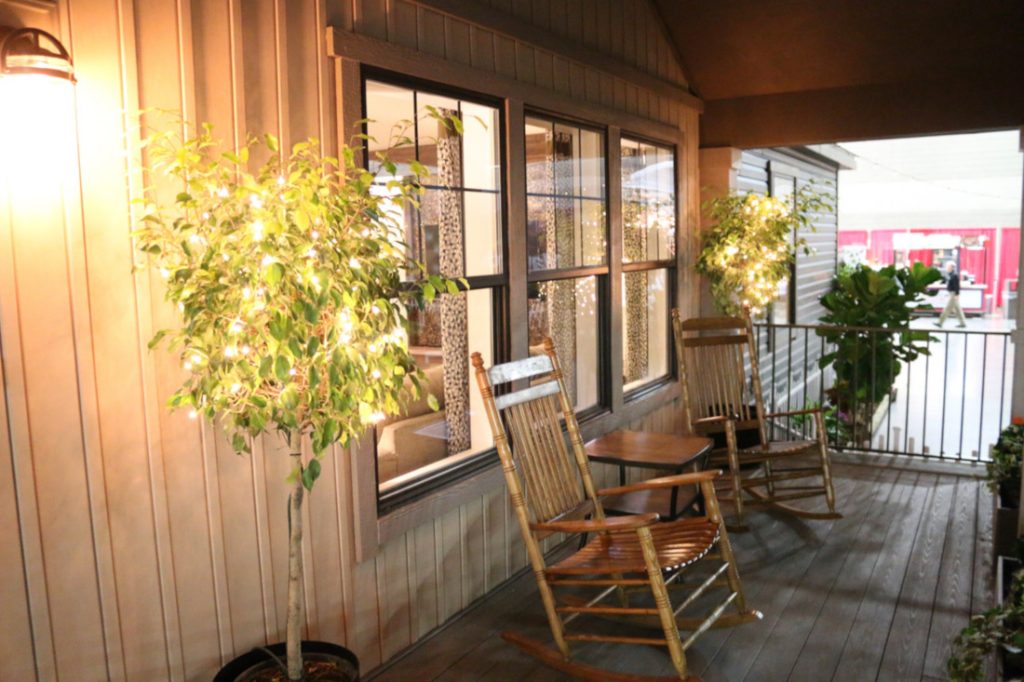
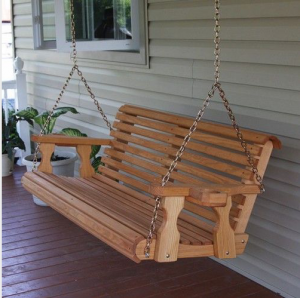
Well, you’ve always wanted one, and now is a good excuse to install a swing or get a couple of rockers for your front porch. That “homey” feeling goes a long way toward attracting customers to the idea of manufactured home living. Create a relaxing picture so they can envision themselves in this kind of easy, simple-maintenance type of life. If you don’t have a front porch, lay out some lawn chairs and tables around the entryways.
An outdoor deck is a perfect setting for stargazing and enjoying the sounds of the seasons. Adding a deck at this stage of the game may seem impractical, but you’ll increase the value of your manufactured home. It’s also the perfect place for a swing.
2. Doors and Siding
Is your home in good shape? Be honest: Underestimating maintenance needs could end up costing you when negotiating a sale. If the siding is damaged, rusted or rotting, you might have to remove and replace it with vinyl or wood siding. But it may be that all it needs is a fresh paint job. A few gallons and you’re good to go! This goes for the entryways, too, especially the front door. The first thing people see is the gateway to your palace, so it’s a definite must-do if the door needs a refresher.
3. Landscaping, Landscaping, Landscaping
The location of your home matters, of course, but no matter how big or small, it’s the landscaping that draws people’s eyes. The lawn must be kept healthy and maintained. You want buyers — especially those who’ve never lived in this kind of environment — to see how easy it is to do and how nice it looks. Hanging flower baskets, neatly trimmed hedges, and window boxes bring a nice ambiance to manufactured home living.
4. Skirting
Exposed structural elements are never pleasant to look at. You can’t make them disappear, but you can hide them. Mobile home skirting looks nice and protects the house from inclement weather and unwanted pests (such as skunks, raccoons, and opossums). And skirting does more than lend mobile home curb appeal. It also can lower your energy bill because it prevents cool or warm air from escaping. Various manufactured home skirting materials from which to choose include vinyl, cinder block, brick, metal and more.
5. The Mailbox
When people drive up to your place, it’s hard not to notice if a mailbox is rusted, dented or is falling off its post. Some home communities have dedicated postal boxes on their sites, but private properties are less stringent. Is the box in good condition? If not, you can find them at hardware stores and sometimes yard sales. But be sure it’s a government-approved mailbox and installed correctly, as per theUnited States Postal Service rules.
Will sprucing up your manufactured home cost a few dollars? Of course! However, you should be able to make those expenses back with a higher selling price. Remember, you are selling your mobile home. But you’re also selling the efficiency and charm of living in a mobile home to those who may have never considered it.
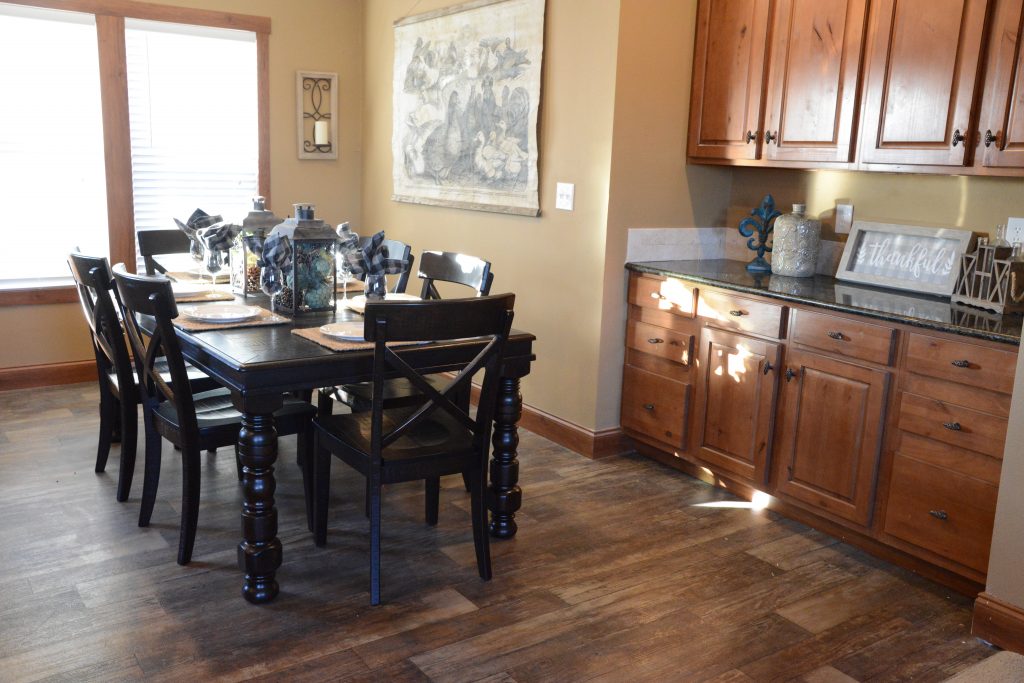
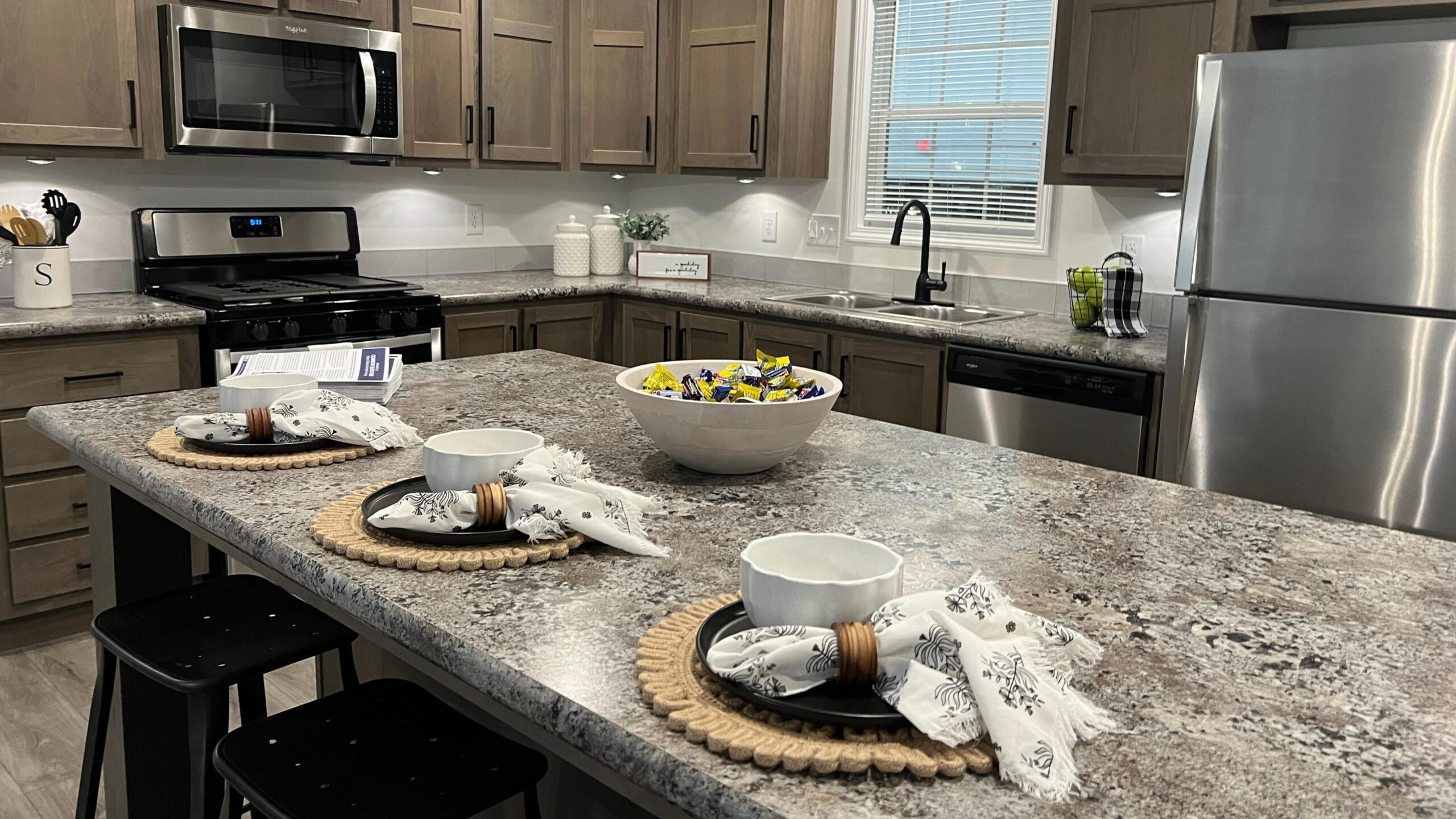
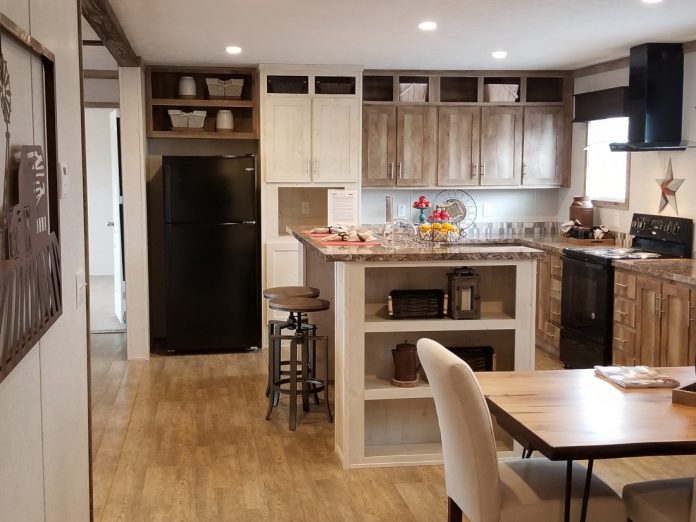
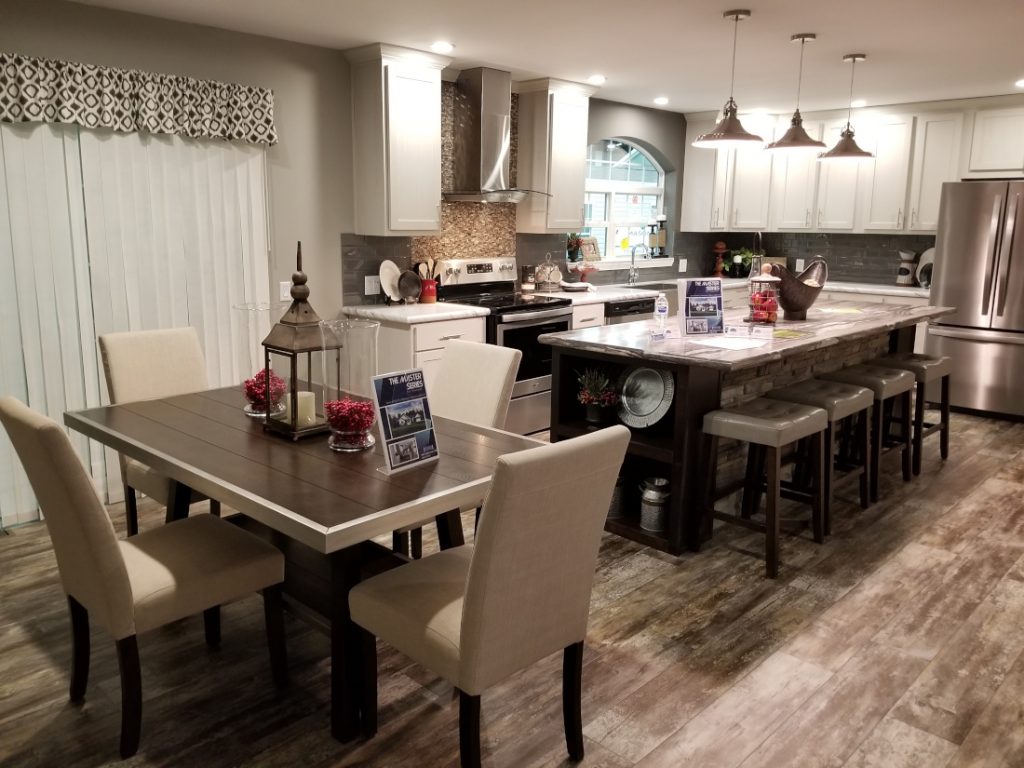
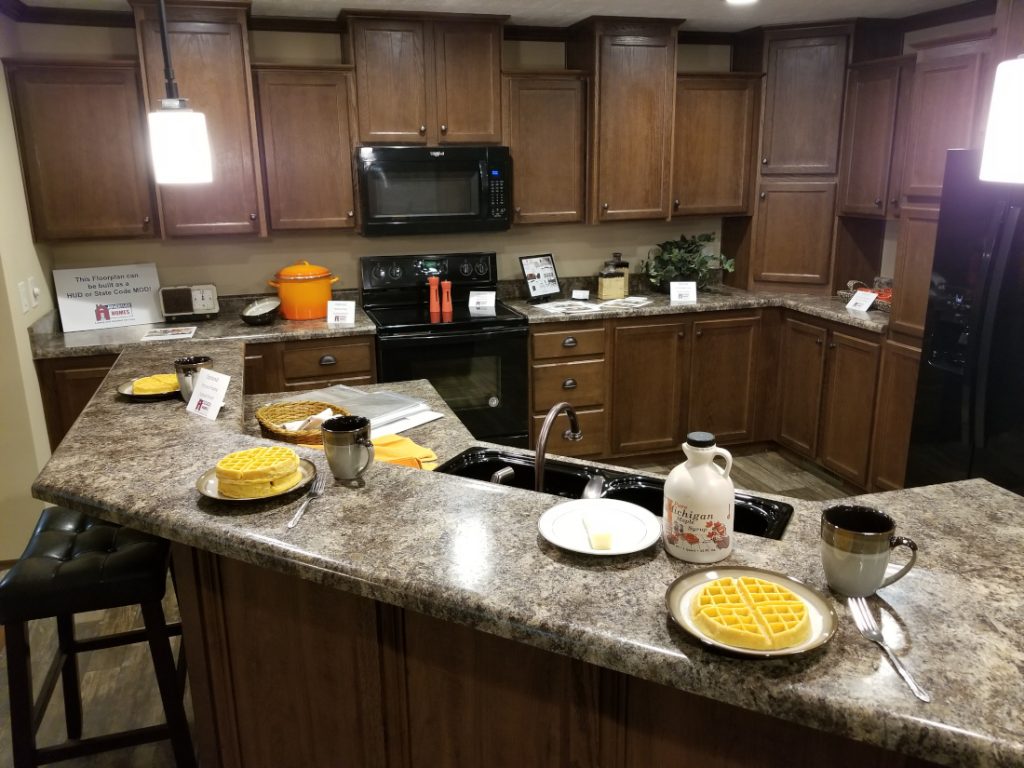
The kitchen and dining area of a 2018 manufactured home from Champion.
How Long Do Manufactured Homes Typically Last?
The lifespan of mobile homes is a frequently discussed topic and a curious consideration. An older study done in 1990 by the Manufactured Housing Institute placed the average life expectancy of a manufactured home at 55.8 years. However, given the same care as other types of homes, mobile homes should last forever. In fact, in mid-2018, the Federal Housing Finance Agency released a report showing that manufactured homes retain value much like site-built homes.
Why would a manufactured home wear out any faster than its counterparts? Manufactured homes are made out of the same materials as any other kind of well-built home. Manufactured homes, which is what mobile homes have been called since 1976, benefit from new technology and improvements to building practices. Also, they have enhanced design and material usage practices that continue to improve all the time.
Someone who wants to buy a mobile home might have the same questions as any other homebuyer — about area taxes or the local school district, for instance. However, the life expectancy of the manufactured home should be less of a concern. Think about the great majority of site-built homes; they are more than 40 years old.
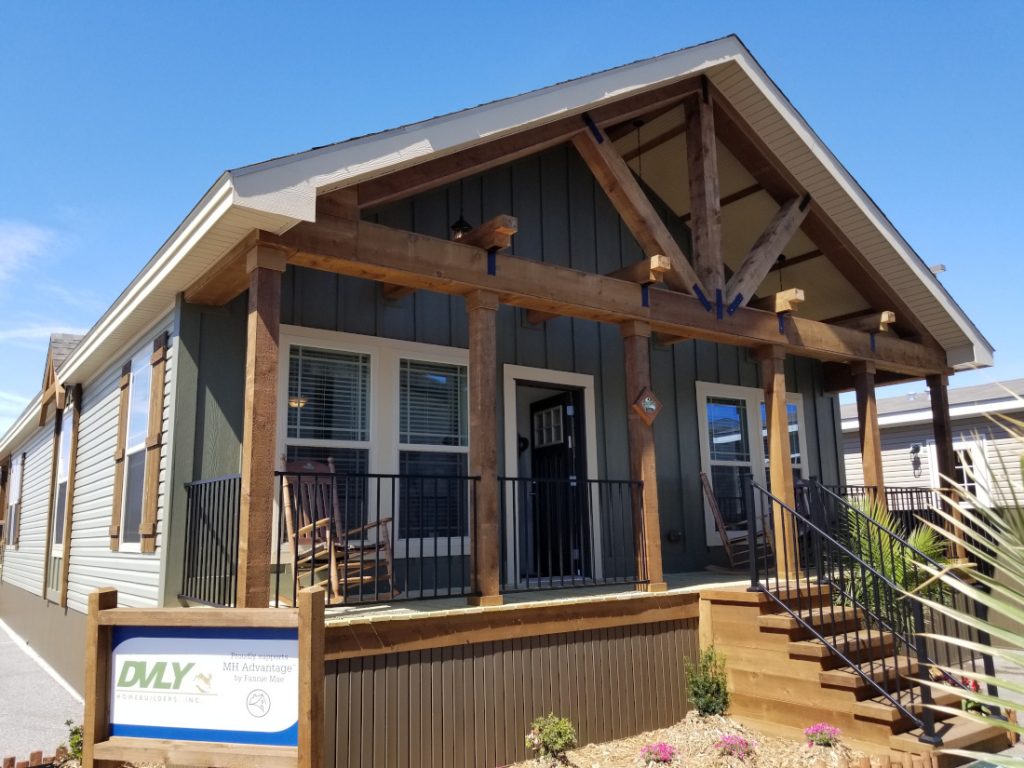
The front porch entry of a new Deer Valley home, shown during The Tunica Manufactured Home Show in 2019.
Why Do Some Believe That Mobile Homes Have a Short Life?
The perception that the life of a mobile home is shorter than other kinds of housing is off-base for a couple of primary reasons. We will detail these reasons, and explain why this thinking is incorrect.
Factors Contributing to Misconceptions About a Manufactured Home’s Lifespan
The Portrayal of Manufactured Homes in News Media
News reports focus on manufactured home communities above all other property types when harsh weather is in the forecast. The building code and enhanced home installation practices for manufactured homes have entirely countered the notion that home built in a factory are particularly susceptible to weather. Yet, popular opinion has been slow to respond.
Emergency Response Practices
In addition, when storm damage does occur, the Federal Emergency Management Agency (FEMA) sends “temporary housing” to areas where people are displaced from all variety of homes. Sometimes the temporary housing issued by FEMA will look similar to the appearance of certain manufactured homes. But, they’re not built to the same standard. Temporary housing is just that: temporary. These units are not manufactured homes, because they’re built only for short-term use. Manufactured homes built to HUD code are built to last.
Unintended Consequences of the Upsell
A site-built homeowner may be pitched the idea to “move up”, or get into a place that better suits their current life needs. In that case, the agent or seller may point to a bigger floor plan or more outdoor space. But rarely, if ever, do they attach the concept of a new or even a newer home. With manufactured homes and other homes built in a factory, there’s a natural inclination to upgrade to a home that’s just been constructed. This can lead to a notion that the previous home is out of commission. A great majority of the time this is not true. The homeowner looking to get the latest model home will sell the existing manufactured home to a buyer who needs and wants that home for their current place in life.
A new home from Kabco.
When is a Mobile Home Too Old?
Determining what age is too old for a mobile home depends on a number of factors that vary from home to home. Everything from the year the home was built, how well the home was maintained over the years, and any damage to the home over its lifespan. One factor to consider is whether or not the home was built before the HUD Code for manufactured homes went into effect in 1976. Homes built after June 15, 1976 are often more durable and can even hold up better than many site-built homes.
Why Factory-Built Homes Hold Up Better Than Site-Built Homes
Platinum Homebuilders’ 2018 models on display.
Reasons to Be Optimistic About the Longevity of Mobile Homes:
Manufactured homes are designed for safety and efficiency
Unlike site-built homes, the wood and metal that goes into a new manufactured home have been safely stored inside a building. The boards, panels, piping, and metal frame that dislike water only experience outdoor weather when they’re complete. Site-built homes have materials outside in the elements as the home is being built. Mobile homes are held to a higher standard for quality and safety than ever before.
Purchasing power for manufactured homes
Homes built in a factory have the benefit of indoor storage space. So, wood, metal, and other materials purchased in bulk and safely stored can provide a notable discount.
Manufactured homes have less waste
New manufactured homes are planned for and built-in stages on a factory line. The cutting and other manipulation of materials create less unused product than that of a site-built home.
Stable labor force
Factories that build homes have trained professionals in each trade area, from framers to electricians, who work in the same building on the same line each day. With fewer variables at play than in the field, the attention to detail and consistency of craft can dramatically heighten standards and outcomes for a new manufactured home.
HUD inspects manufactured homes
Since 1976, the U.S. Department of Housing and Urban Development (HUD) has maintained a high level of quality inspection on all manufactured homes. In fact, it’s not a manufactured home until HUD has attached its metal verification plate. With inspectors in a home-building facility several times per month (not to mention in-house inspection and quality assurance), manufactured homes rank as the most heavily inspected form of housing.
Homes in Cinnamon Woods, a UMH Properties community.
Understand When Mobile Home Refinancing Makes Sense
There are multiple ways to save money by refinancing your manufactured home. Refinancing a home can get you a lower interest rate, reduce the term of the loan, cut your monthly payment or reduce the overall cost of financing.
So, to get started, let’s answer a few questions on the topic of manufactured or mobile home refinance.
Why Would I Want to Refinance?
Many homeowners refinance because they’re feeling the pinch in other areas. Childcare, medical bills, a kid in college, insurance premiums, the need for a new car. The list can go on. There are many reasons people begin to think about leveraging the equity in a home to balance the books.
Or, perhaps a homeowner simply wants to pay less and pocket more. There’s nothing wrong with that!
A model home from the Masters Series by Fairmont Homes.
How Do I Know If Refinancing Is Right For Me?
One-year trend for 30-year mortgage interest rates, provided by Freddie Mac.
First, determine if the potential end result of mobile home refinancing is important to you. Do you want to save a couple of hundred dollars or more per month? Is there a place that money could be better spent?
If so, take stock of where you are in your loan program and compare against current interest rates. Rates remain low, so the timing may be in your favor. Given the potential for a lower interest rate, consider how much equity you have in your home today.
What is Equity in a Home?
The equity in your home is a representation of the appraised value of your home compared with the remaining balance you need to pay on your manufactured or mobile home loan. The more equity you have, the greater the number of refinance lenders and loan products will be available to you.
The difference between the appraised value and the loan balance often is referred to as the loan-to-value ratio, or LTV.
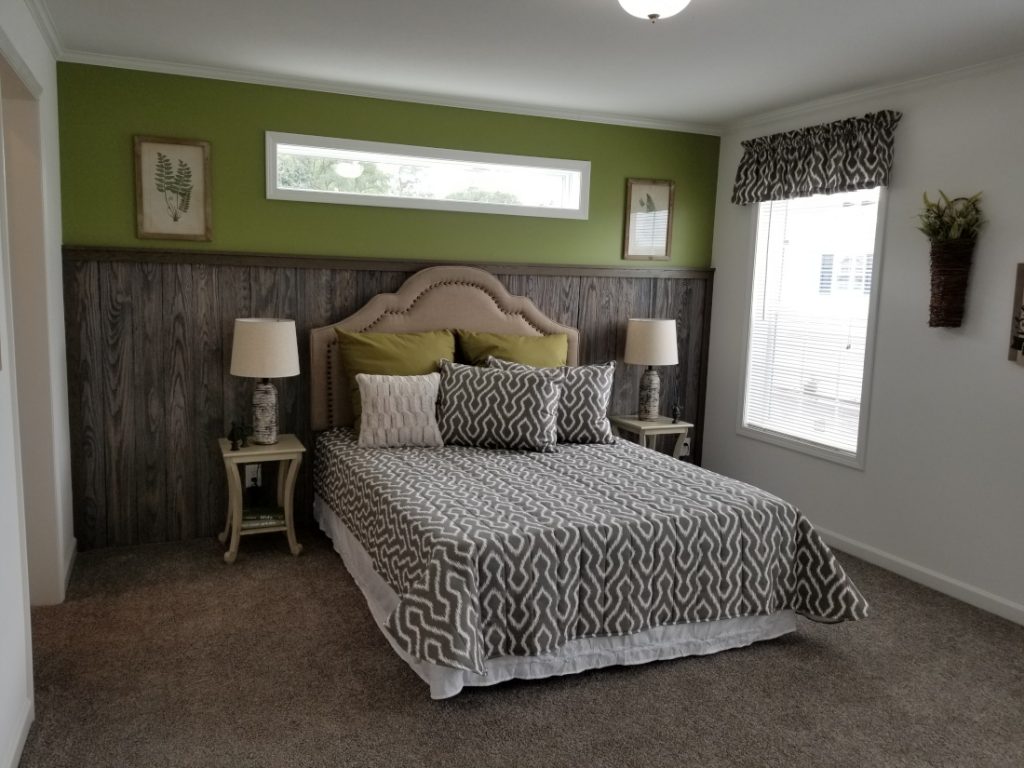
The bedroom in a Redman Home shown by UMH Properties.
How Much Does Credit Score Matter?
Credit score matters, but not as much as some may believe. Although lenders will look at the credit score, equal or greater weight is given to the debt-to-income ratio. And there is another reason a score alone may be deceiving. A potential borrower may have good, or even excellent credit, but a limited credit history. Ideally, you want five years of credit history. Lenders also like to see seven well-maintained open lines of credit. If you happen to be on the lower end of the spectrum, don’t worry, you have a number of options. See our guide for buying a mobile home with bad credit.
Mobile Home Loan Calculator
If you’re looking around for tools to find out how much of a difference mobile home refinance can make for you, you’re in luck. Many lenders provide manufactured home loan calculators on their website. A home loan calculator can give you a rough understanding of what a monthly loan payment might look like. You need to remember this is an estimate. Plus, you will want to have some information ready when you look up your potential costs or savings.
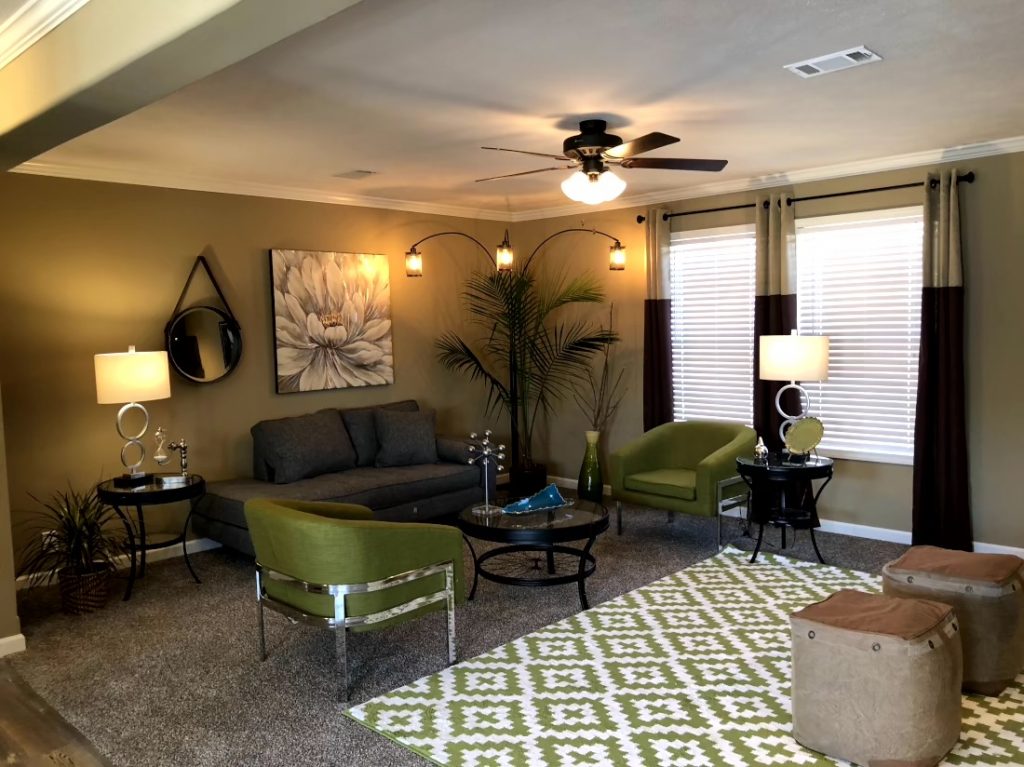
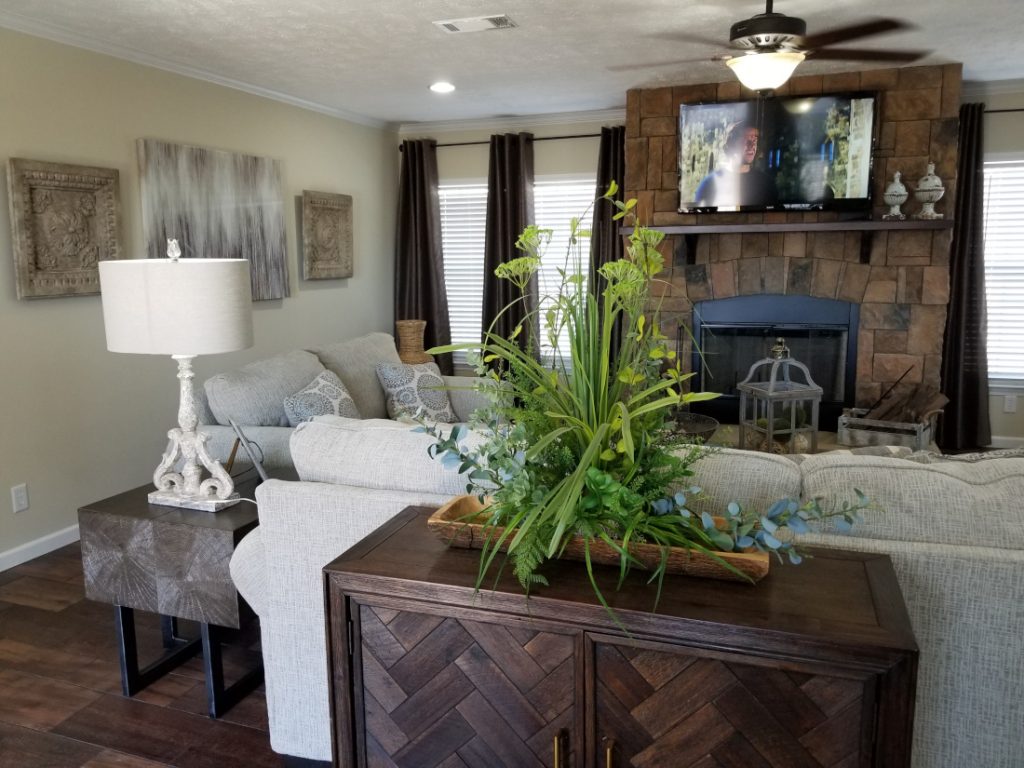
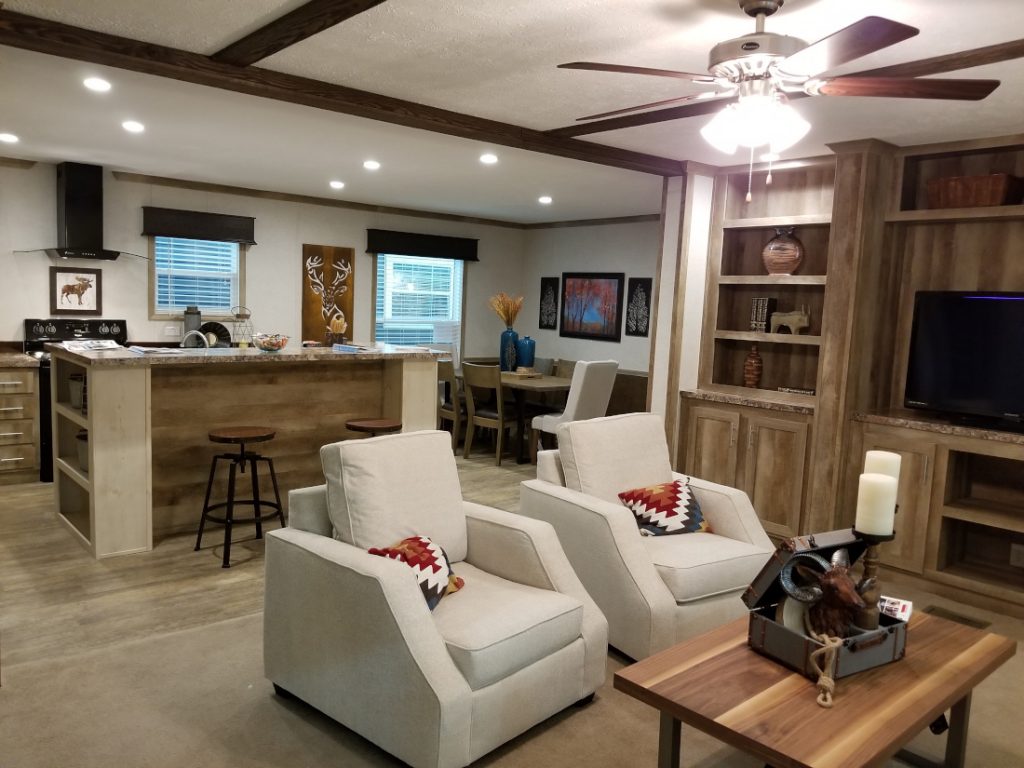
The interior of a 2018 model from Sunshine Homes.
Items you should have available for a manufactured home mortgage calculator:
Mortgage term
Interest rate
Purchase price
Down payment
Property taxes
Mortgage insurance cost
Some of the mortgage calculators offered by lenders and others in the housing or home loan business provide fields specifically for refinance. However, a standard mortgage calculator will work if you simply add the information for your refinance terms and existing home information as if it was for a standard loan.
An MHE Enterprises home.
How Does Manufactured Home Refinance Save Me Money?
Monthly Bills
If all you want is a break on your monthly loan payment, the picture is pretty simple. First, take a look at the rate you pay for your loan today. If it’s higher than the rates being offered today, you may be in business. When you pay a lower interest rate, the cost to borrow is lower. That means your monthly payment will decrease, too.
Private Mortgage Insurance
Borrowers who are able to pay 20 percent or more in cash as a down payment on a mobile home loan won’t need private mortgage insurance, or PMI. However, people looking to buy a mobile home or manufactured home who are unable or unwilling to put down 20 percent of the purchase price of the home at closing will be required to obtain private mortgage insurance.
Private mortgage insurance is set up for the borrower. It costs about 0.5 to 1 percent of the loan amount. So if you have a loan for $74,000 (the average cost of a new manufactured home), you may have to pay about $20 per month in PMI, until approximately 22 percent of the loan principal is paid.
What we’re getting at here is if your home refinance plan lowers the cost of the loan to a point where you’re 22 percent or more paid in, you should be able to drop the private mortgage insurance and save that monthly payment.
Term of the Loan
Homeowners refinance for a variety of reasons. Often times, the homeowner is looking for more bang for the buck rather than reduced monthly bills. If this is you, the term of your loan might be worth considering. If you can get a lender to refinance the balance of your 30-year loan into a fixed 15-year loan, the monthly payments may be about the same under a new rate, but financing costs with the shorter term (number of years) will be much more affordable overall.
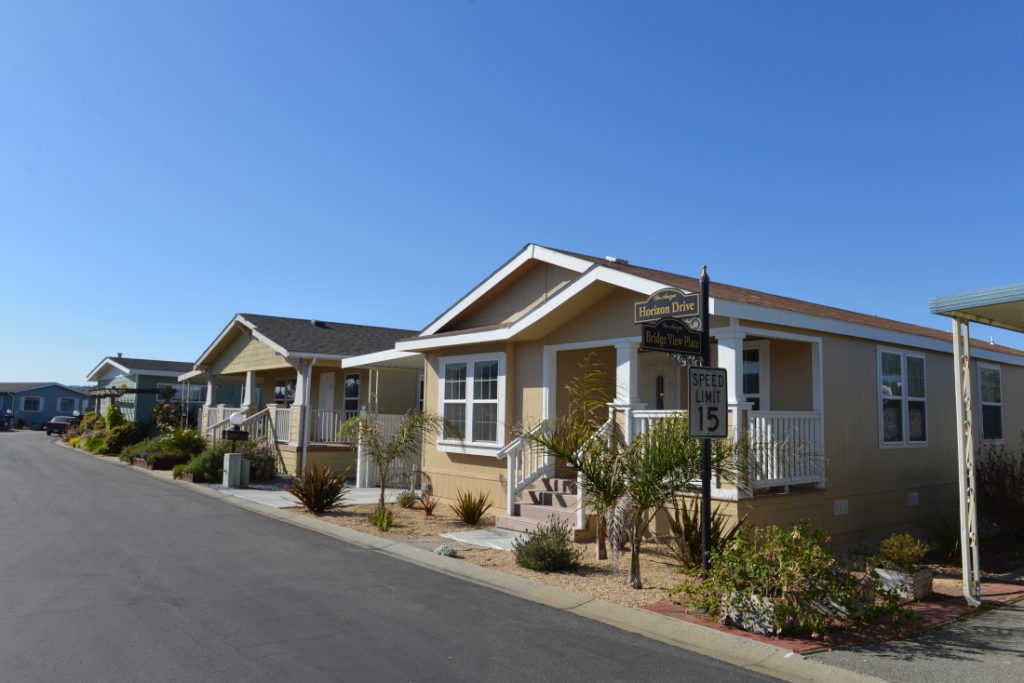
A DeAnza, California, community. Photo courtesy of Equity Lifestyle Properties.
Are You Refinancing From a Chattel Loan to a Mortgage?
Converting from chattel, or personal property loan, to a mortgage is one of the primary reasons people look into mobile home refinancing. A traditional mortgage, even one with a 15-year term, can have significantly lower interest rates than a chattel loan.
While risk assessments are changing in favor of manufactured homeowners, many lenders continue to value a traditional mortgage over chattel lending because of the ease of recourse in the event there is a loan default. In other words, a manufactured home affixed to an approved foundation on a piece of land owned by the homeowner provides more security for the lender. Hence, the rate will be lower.
The kitchen in an Adventure Home.
Converting a Personal Property Title for Your Manufactured Home
In order to be considered for a mortgage, the personal property title for your home will need to be changed to a real estate title. A title agency or real estate attorney can assist with this process. The primary component when converting a manufactured home to real estate is providing proof of ownership for both entities. You will need a certificate of title or a manufacturer’s certificate of origin to prove you are the homeowner. Additionally, you need to provide a land deed in your name for the property with an approved foundation where the home will reside. When that process is complete, you will be able to take your real estate title to the bank or other lending institution.
Clayton Heritage home, shown at the 2018 Novi Home Show.
Options Beyond Conventional Mortgages When Refinancing a Manufactured Home
Some lenders offer a reverse mortgage for a manufactured home, or a cash-out refinance for manufactured homes. These mobile home refinance options come with added protection and can be more difficult to obtain. However, they’re worth the try if you have enough equity and want cash to complete home improvements, for instance.
What Lenders Participate in Manufactured and Mobile Home Refinance?
All the lenders with the greatest interest in the manufactured housing industry will offer some form of refinancing for manufactured homes. These include 21st Mortgage Corp., Cascade Home Loans, Triad Financial Services, Credit Human, CountryPlace Mortgage, and others. In addition, these and many other lenders participate in programs with secondary market products provided by FHA, USDA, VA, Freddie Mac and Fannie Mae.
Owners who are looking to upgrade or sell their mobile home often want to know the worth of their home in dollars. Unfortunately, it’s impossible to get an accurate number by doing a quick web search. There are a variety of factors involved with estimating the true value of a mobile home, so let’s break down the most important ones.
How Much Do Old Mobile Homes Sell For?
The average used mobile home price in the United States is $69,781.05. However, how much old mobile homes sell for in your local area is determined by many factors including the age of the home, size, materials used in its construction, appliances included, any additions to the home, its overall condition and local housing market conditions. Some of these factors affect the price of the home more than others. So, it is wise to review listings for several homes for sale in your area to familiarize yourself with what is typical for your local market.
Top Factors That Determine Mobile Home Worth
Age of the Home
The age of the home is a factor, but only in one primary sense. Was your home built before or after June 15, 1976? This date marks the true difference between a mobile home and a manufactured home. A mobile home is a home built prior to the 1976 date and a manufactured home was built after that date. Why does it matter? June 15, 1976 is when HUD code went into effect. That code and its subsequent updates are responsible for improved building practices that ensure the quality, long life and value of a home.
Size of the Home
In general, a home with more space is going to be worth more. There’s more material in use, and there’s more living space. Buyers typically prefer larger homes with more square footage, whether that additional space is used for another bedroom, more storage, or a larger kitchen. Learn more about the different mobile home sizes and how they impact price.
The interior of a Skyline home.
Materials Used in the Home
The average value of a new manufactured home is about $74,000. Material choices that can make a home more valuable than the average are things like hardwood cabinetry, finished drywall versus wallboard, energy-efficient windows, upgraded lighting, and six-panel doors.
Appliances Included with the Home
Modern manufactured homes are technology-rich and loaded with energy saving appliances. Most people know about Energy Star ratings, and appliances that are rated as such add value to a home. Buyers also will pay more for stainless steel appliances. Another valuable feature that’s becoming increasingly common in manufactured housing is the smart thermostat. If you want to save money on monthly bills, energy efficiency is a great way to go.
Additions to the Home
When your home was delivered and set up, did you have a porch or garage put on? Perhaps you created a wrap-around deck or had a dormer included? Any of these post-factory additions can add to the value of a manufactured home.
The interior living space of a Skyline home.
Housing Market Where the Home is Placed
Location, location, location. Homes cost more in some markets than others. It’s easy to understand why this might be the case. If your home is near the beach or on a golf course, it may be more desirable to buyers and sell for more money. Likewise, if your home is located on a quiet, wooded lot, it may sell for more than one located near a busy entrance.
Condition of the Manufactured Home
Regardless of where the home is and what it features, the overall condition of a home is of utmost importance. Of course, the primary systems are of most concern: Roof, HVAC, chassis, electrical, plumbing, and windows. But overall, buyers want to see that the home has been maintained from top to bottom.
So, What is My Mobile Home Worth?
You now understand the primary factors that are considered when determining a mobile home’s value. But, we still haven’t answered the initial question of what your home is worth. Because every home is unique, it’s impossible to give an accurate answer without a thorough assessment. So, here are a few actionable solutions.
Three Ways to Find the Value of Your Mobile Home
Get a Free Book Value
Obtaining a free mobile home value report is one way to get a quick understanding of how to price the home if you’re looking to sell. The book value regards the make, model, and year of a mobile home. It provides an average value based on this information. If your home happens to be “average” and is located in an average market, then maybe the book value will work well for you. Half of the mobile homes like yours will be worth more than the number you get. The other half will be worth less. What you’re buying is an average value for the make and model of your home.
Realistically, either your home, community, or market is likely to be unique in some way. Therefore, book value may not provide you with the most helpful pricing information.
Search MHVillage for Mobile Home Prices
MHVillage has tens of thousands of manufactured homes for sale across the nation. Do a little research by using the MHVillage search feature. You can select all of the criteria, from geography to floorplan, and find the homes that are most like yours. For instance, if you have a 40×48’ 2006 Palm Harbor in an Orlando retirement community, there are similar homes in the MHVillage listings. Searches that meet these criteria will reveal that homes are selling for about $130,000.
Order an Appraisal from Datacomp
Datacomp is the leader in mobile home appraisals. The company has more than 550 inspectors across the country and can provide you with a written appraisal report within six days in most cases.
Datacomp assigns a local inspector to come on-site to your home to gather the information necessary for a staff appraiser at Datacomp to determine the fair market value of your home. This is done by comparing your home to the most similar market-based appraisals the company has conducted during its 30-plus years in business.
Some of what a Datacomp inspector will consider to get a specific mobile home value:
Age and size of the home
Quality of the construction
What appliances come with the home
Are there additions (such as garage or porch) that add value?
What are the values of similar homes in the community or market?
MHVillage is the #1 Place to Buy, Rent or Sell a Mobile Home Anywhere in the U.S.
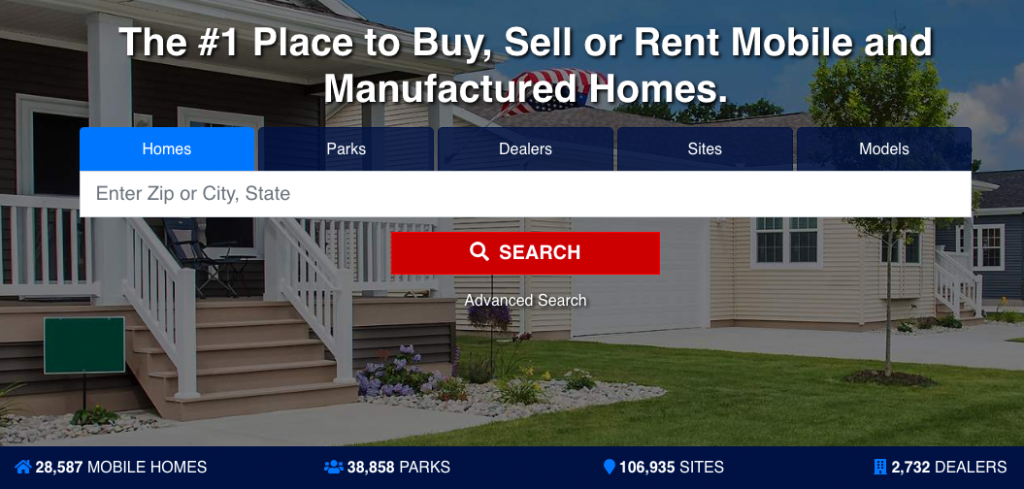
MHVillage is the premier marketplace for mobile and manufactured homes. We help you sell, rent and buy mobile homes. The website has home listings in all major U.S. markets and many midsized markets. MHVillage.com gets 25 million annual unique visitors. In 2018, MHVillage listings drove $3.5 billion in home sales.
What Can I Search for on MHVillage?
MHVillage has more than 28,000 manufactured and mobile homes for sale. The site also has listings for more than 38,000 mobile home parks or manufactured home communities. Additionally, it can be used to search through more than 100,000 available mobile home lots and find better than 2,700 mobile home dealers.
How Do I Find Home Listings on MHVillage?
MHVillage is easy to use. When you land on our homepage, you can enter a zip code or city and state to bring up listings for where you want to search among hundreds of U.S. markets. You also can click on Advanced Search to narrow the field in any given market. This same search methodology works for finding listings of homes, parks/communities, new model homes, retail dealerships, and even homes on a dealer lot. All you have to do is click the tab that interests you most.
You can find a mobile home or manufactured home on MHVillage by searching communities, and you can find a community to live in based on a home you like. The databases are cross-referenced for your convenience and preference.
MHVillage also provides a handy U.S. map on its search pages, so you can click on a state you like and get a list of cities where mobile and manufactured homes for sale are located.
What Else Can I Do on MHVillage?
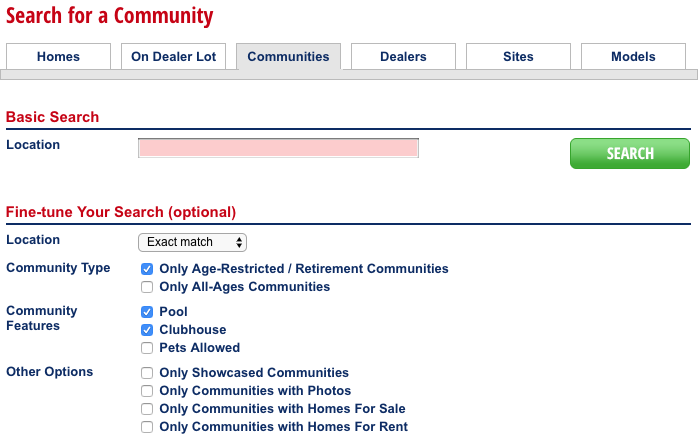
There are all kinds of search options to make use of once you become comfortable with the general search functions. Narrow your search by checking a box for preferences like a retirement community, a pet-friendly community, a manufactured home on private land or a resident-owned community. Another way to explore a wide variety of custom home options on MHVillage is to search mobile home floor plans in the “models” section. When you find something that really piques your interest, you can “like the home”, which is a way of bookmarking the listing.
Want to Learn More About How to Sell Your Mobile Home on MHVillage?
MHVillage is an advertising platform for homes made in a factory. We help connect sellers and buyers. However, MHVillage does not own homes, nor does MHVillage own or operate communities.
Still Have Questions About What MHVillage Is?
Contact us! We have a friendly staff that is ready to help when it comes to listings on MHVillage and buying a mobile home.
Let a little nature shine in to bring more joy to your space at home.
Bring Spring Into Your Home with These 5 Tips
As we finally approach springtime after many areas in the U.S. have experienced everything from a polar vortex to record-breaking snowfall, many are itching to feel the warmth of the sun on their faces.
For those in areas where spring can remain cloud-covered and rainy, we wanted to give you some practical tips for how to enjoy nature even if you remain largely stuck inside.
The Benefits
Adding natural light to a home can cause energy costs to decrease by as much as 75 percent. However, additional research has proven that natural lighting helps people be more productive, happier, healthier and calmer. Natural light also has proven to regulate some mental health disorders including Seasonal Affective Disorder.
The How
When you bring the outdoors in, it can be easy and also fun. Incorporating our happy, light idea of springtime even when the weather may be more rain-soaked than sunny, can help us improve our mood as we re-decorate.
Bring Plants and Flowers Inside
Whether you pick up a bunch each week from your local farmers market and use a simple Mason jar for a vase, or you prefer long-lasting succulents, choose an uplifting plant or flower and stick to it. Bringing in the green and the bright colors of floral arrangements can lift our mood and increase the natural flow of oxygen in your living space.
When you want to push a little further, it is always great to add a large plant such as aloe or even a small citrus tree. Something like this can be planted in a basket to live in the corner of your small space. These little details can really bring the sunshine inside.
Use Natural Building Materials to Bring the Outdoors In
Natural materials are home products and physical materials from the natural world. Organic materials include plant products, materials like wood, fiber, bark and soil are some examples. Inorganic materials are mineral products like stone, metal and composites like clay. Some benefits offered by these are:
Low maintenance and operation cost
Energy efficiency
Enhances indoor environment quality
Water efficiency
Better health
Material efficiency
Better for the environment
Reduces strain on local resources
Use Natural Light and Fresh Air
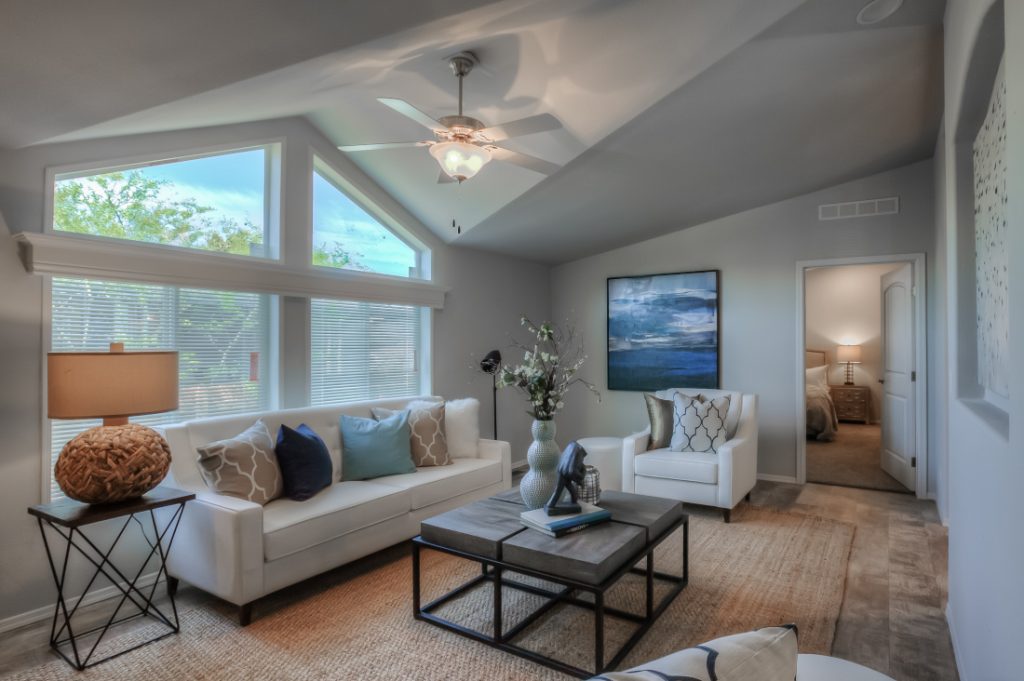
Let the natural light shine in – it makes this room feel bright and inviting. Freedom Homes of Sherman, Texas courtesy of Steward Photography
This idea goes beyond simply incorporating screens in doors and opening your house windows. From the building front, adding more windows or larger ones like French doors can be a great way to allow more natural light and outside air spill in.
Air conditioners and heaters can accelerate the airflow in your home. But these options require greater energy consumption. So opening windows across from each other in a floorplan can allow air to flow freely through a home. Open those at opposite ends of a house to push air through the space, especially when ceiling fans are used.
To Bring In the Outdoors, Create a Green Space
The green colors pop this spring in the new Platinum Homes model, The Jackpot, shown in March at The 2019 Tunica Show. Photo by Annabelle Clark.
This is a perfect idea for a kitchen, home office, or even one wall of the main living space. Growing a green wall can be as minimal as adding hanging baskets and planters with florals, succulents, or even herbs… or as complex and growing ivy to cover an entire space. This greenery livens up an interior, adds a pop of color, and also brings a natural vibe that isn’t found in a bouquet of flowers.
Use Nature-inspired Decor
Clayton Homes showed some wonderful nature-inspired exteriors at the recent Louisville show including this Heritage model complete with rockers. Photo by Lisa Stewart Photography.
This idea never goes out of style. From the incorporation of hardwoods in tables and furniture to the accents of wool on blankets and baskets, these natural fibers breathe life into an otherwise underwhelming space. Natural decor can soften a bedroom, bring fun into a child’s area, or vibe up a shared living space. With modern manufactured homes offering many interior design options, the opportunities are endless.
Some of our favorite nature-inspired decor to bring in the outdoors includes:
Exposed brick backdrop
Firewood in a living room
Natural wood furniture
Wool blankets on bed and couches
Organic sheets in a child’s room
Bamboo in the bathroom
When you bring the outdoors in, it allows you room to breathe. The inspiration that comes from the fresh air, natural light, organic materials, and natural decor can breathe life into your home too.
Buy a New Manufactured Home
If you’re looking to buy a mobile home through MHVillage, follow the above link to our homes for sale or rent page. Choose the city you want and use the checklist and dropdown box to narrow your search. There are more than 28,000 mobile and manufactured homes for sale on MHVillage!
A hauler moves a manufactured home on a city street.
Here’s Everything You Need to Know About Moving a Mobile Home
Moving a mobile home comes with a long list of logistical details prior to getting the home on the road. Everything from what the cost of moving a mobile home is, to what kind of distance is reasonable, and how to secure your investment should be considered.
So, we’ll cover this ground and much more in regard to how to go about moving a mobile home. We will start with the most frequently asked questions and work our way to the finer detail. Thanks for coming along for the ride!
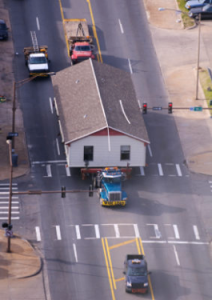
A multi-section home is escorted down the street.
How Much Does it Cost to Move a Mobile Home?
This is the big question. Many times homeowners and residents want to ask, “Can I move a mobile home for free?” No, if you’re asking this question, you’re probably headed down the wrong road.
A professional mobile home transport company will charge $3,000 – $5,000 to move a single section manufactured home.
A larger home, one that’s two or more sections, may need to be moved in sections and could cost $10,000 or more. Again, the added cost for moving a mobile home depends on the size and stability of the home, as well as the distance and route being considered. Most times, moving a large mobile home will require assistance vehicles to lead and tail the home.
How Are Moving Costs Calculated?
The range of cost from $3,000 to $10,000 or more depends on a few factors:
How old is the home, and what kind of shape is it in? The more sturdy the home, the better.
How far must the home be moved? Most movers want to stay with 100 miles.
What kind of access is there between the existing and desired home site? There is a lot to consider here, from bridges to city streets, to access through a mobile home park.
What kind of prep and finished work must be done? Will you prep the home yourself, or are you hiring someone?
Do I Need a Permit to Move a Mobile Home?
Yes, typically a permit is required to move a mobile home. For instance, a Michigan permit to move a mobile home is required if the home is more than 8 1/2 feet in width, 12 1/2 feet high and more than 60 feet long. Most homes are larger than those dimensions. So a single section home in Michigan can be moved with a permit that costs as little as $15. Larger or heavier homes may require an “Oversized Load” permit, which will range between $30 to $100.
However, that’s an example of how the State of Michigan issues permits. Be certain to check state laws and local ordinance where your home will travel.
A team in Atlanta, Ga., moves a mobile home into a community.
Should I Hire a Professional to Move My Mobile Home?
Yes. When you’re moving your home to a new location, it’s always best to hire a professional. The following are some of the primary reasons why it’s a good idea.
Licensed/Insured/Bonded
A professional mobile home transport company, or mobile home mover, will have the protections in place in case something goes wrong. There are many potential unforeseen complications when a home is hooked up and taken on the road. Low hanging tree limbs, road construction, excessive traffic, tight turns or low bridges can come into play. Any of these circumstances could result in costly damage or even injury. Once your home gets moving, you want the professional with the standard protections to be responsible for anything that may go wrong.
Inspections
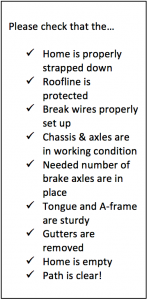
Your hauler will either hire someone or conduct inspections themselves. The axles and chassis of the home need to be in good enough shape for travel. Roof lines, windows and doors need to be secured. Siding may need to be battened down. The interior of the home should be stable. A trained professional will be able to identify if any adjustments or fixings are needed.
The Large Load
Not too many people feel comfortable trundling down the road with a 60-foot home behind them. Professional drivers will have the spatial relationships needed to ensure the home is moved along unharmed.
Protect Your Investment
Investing in a safe and sound way to move your home should be a priority. It’s smart to pay a relatively small amount up front, whether you’re moving your single section mobile home a short distance, or have a more complicated move with a larger home. A lack of planning or upfront investment could result in a much larger bill in the end, particularly if the home is damaged.
For more information on moving a mobile home, continuing reading the following section with advice from a professional mobile home mover.
Conversation With a Professional Mobile Home Mover
Michael Oslau has covered many thousands of miles across the U.S. in the name of manufactured home transport.
He’s a shipper, toting homes for Skyway Custom Transport of Renton, Wash. His days are spent moving mobile homes, but certain parts of his day involve little extras, brought on by necessity.
Michael Oslau can be a little bit home inspector, a little bit landscaper, a little bit physicist, sometimes meteorologist.
“I rely on a tear down guy, and it’s hard to make sure they caught everything,” Oslau said. “There are a lot of factors involved in the transport.”
When he’s going to pick up a new home, Oslau can rest easy knowing the details have been covered by the manufacturer or dealer. But moving an existing mobile home can be a different story.
Sometimes in an effort to save money, homeowners will elect to prepare the home themselves. And even if one does make the decision to hire a contractor, not all outfits are the same.
We asked Oslau to answer a few questions about how consumers – and the people who can be hired to move a mobile home – can gain the best experience possible.
What is the first thing you check when you arrive to move a mobile home?
“I look for a leading-edge board on the roof tile. If the wind gets it, it will pull the roof off. Tiles can go flying, and the state police don’t like that. Sometimes the roof can peel off all at once. No one likes that either.”
How do you secure a dilapidated roof while moving a mobile home?
“If you think you might need a new roof, take the old one off before we ship. You can ship without a roof, but you can’t have stuff flying off the home. You can put the new roof on at the new site.”
What is the best way to secure everything while moving a mobile home?
“New homes are easier, because it’s ready to ship for the most part. When someone gets a used home it’s more difficult, and many times the customer wants to get the work done themselves. They can be poorly strapped,” Oslau said. “This creates a twisting motion when you lift it, and can cause some problems if it twists too far. It’s more than a cracked wall. That can be fixed. Sometimes the walls will peel off the floor.”
How does an older mobile home fare during a move?
“Is the siding falling off? Is it wood, aluminum or even concrete siding? Was it built with concrete? Sometimes features are added after the home was originally purchased and sited. This means there’s a good chance the home weighs more now than it did when it was put on that chassis. The chassis is original to the home, and it’s only made to carry the weight of the original home.
“You also want to make sure the axles, tongue and A-frame are in good condition, with no damage or erosion that can weaken their ability to carry the load.”
What should be taken out of the home prior to moving a mobile home?
“Anything that’s not fixed to the home, and even some items that can be detached should be pulled from the home. Again, these axles can only hold so much weight. It’s designed to carry the weight for that section of the home that sits above it, not for all of the stuff that might be left in it.”
What else needs to be secured before you move a mobile home?
“Doors and windows need to be secured. I had one with a tip-out on it, and I had to have the set-up crew come back and put boards over it. The window kept wanting to slide out of the house, off the truck.”
What do you need in terms of access to the home?
“Usually if the home’s in a community, it’s going to work out alright. If it’s a home out in the middle of the woods, the access better be clear and straight. Sometimes a home has been in a place long enough for trees to grow up and block the way. Sometimes trees and other obstacles need to be removed, and that’s something a homeowner can do themselves or contract out.
“You can ask your shipping company to do a site check,” Oslau said. “Some will, some won’t.”
Additionally, even transport of the smaller homes require 14-feet of road width to be passable.
“A 14-foot wide driveway off a two-lane highway won’t take a 14-foot wide home,” Oslau said. “When you’re turning off a tight space, the width is more like 30 feet wide.”
Where are you unable to put a home?
“Depending on how much money you want to spend, I can put one on the top of a mountain if you want to build the road,” Oslau said.
How does weather impact your work?
“Most of this stuff needs to be done during the summer,” Oslau said. “And wind is something you need to be aware of. There actually are highways in some places that have signs saying ‘no manufactured homes’. But, really, it’s about knowing what you’re doing when you get into truly scary places.”
Looking for Additional Insights? Let MHVillage Help!
At MHVillage, we’re dedicated to helping aspiring homeowners make educated decisions throughout their journey to buy a mobile home.
If you’re still in the pre-planning phase of moving your home, we can help ensure that you’re properly informed to find the right community to move into. There are several advantages and disadvantages of different communities that you’ll want to consider. Or, if you’re looking for guidance on mobile home roofing prior to moving, we have you covered.
We also have tools to connect you with mobile home movers and transporters. This page allows you to browse by state to find professionals in your area who specialize in manufactured and mobile home transport.
Heads up, Southeast Michigan! The Novi Home Show will host six stunning manufactured homes for public display at the Michigan Manufactured Housing Association (MMHA)...
This weekend, October 7th through the 9th, 2022, is your opportunity to tour six model homes as part of the Manufactured Home Showcase.
The Showcase,...



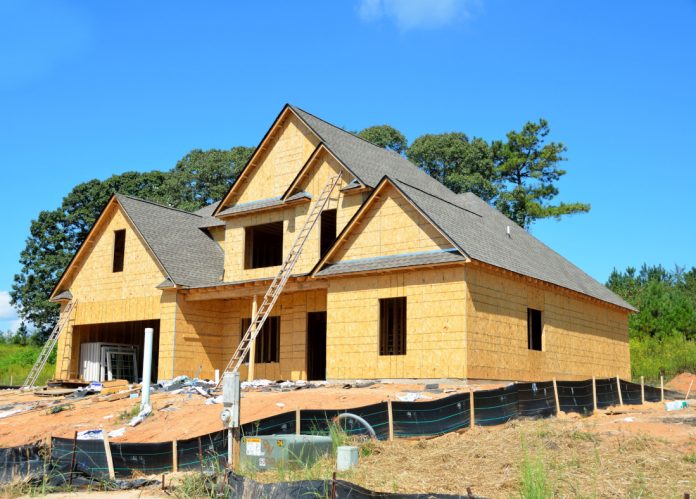
 Beyond weather, stick-built construction naturally runs into delays due to material delivery and subcontractor schedules. These challenges are avoidable in the factory.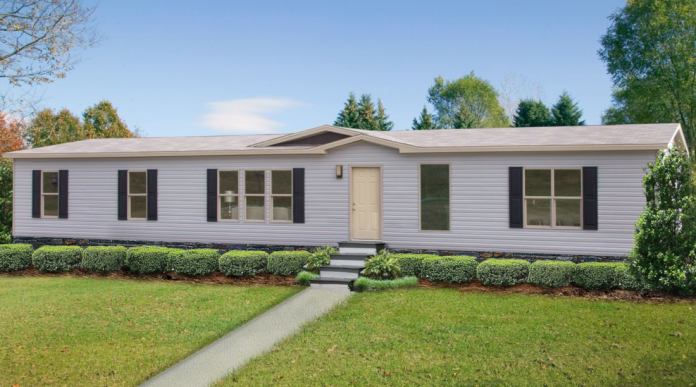
 Well, you’ve always wanted one, and now is a good excuse to install a swing or get a couple of rockers for your front porch. That “homey” feeling goes a long way toward attracting customers to the idea of



 MHVillage has tens of thousands of